



Air-Type Universal Circuit Breaker 1600A: 9 Powerful Advantages for Low Voltage Distribution Panels

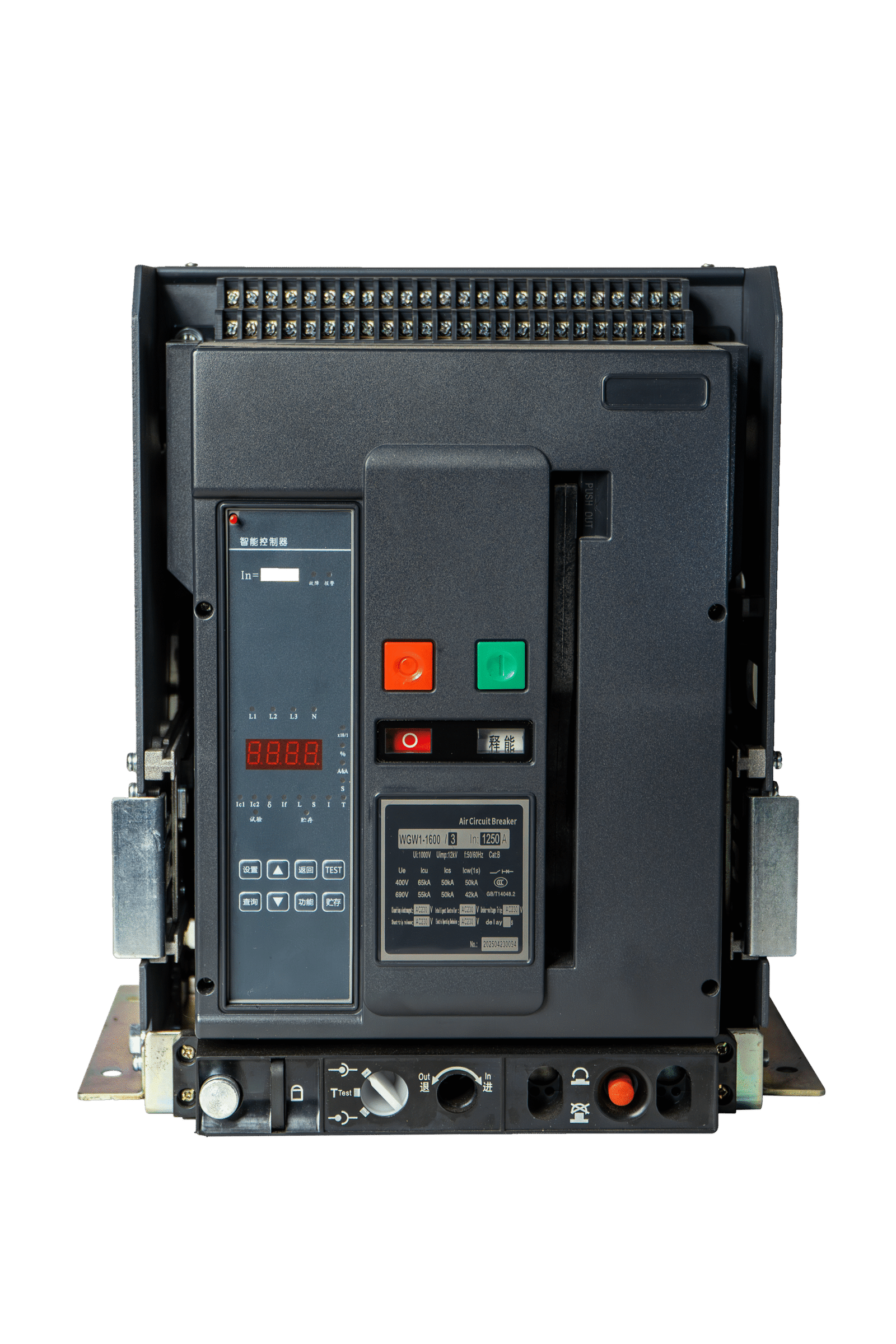
Outline for Air-Type Universal Circuit Breaker 1600A for Low Voltage Distribution Panels
| Section | Details and LSI Keywords Covered |
|---|---|
| Introduction to Air-Type Universal Circuit Breaker 1600A | low voltage protection |
| Understanding an Air-Type Universal Circuit Breaker | ACB fundamentals |
| Why 1600A Rating Is Critical in Low Voltage Panels | high current systems |
| Evolution of Air Circuit Breakers | electrical protection history |
| Construction and Working Principle of Air-Type ACB | arc extinction |
| Key Components of 1600A Universal Circuit Breaker | trip unit, contacts |
| Protection Functions in Air-Type Universal Circuit Breaker | overload, short circuit |
| Selectivity and Coordination in Distribution Panels | discrimination |
| Role in Low Voltage Distribution Architecture | main incomer |
| Fixed Type vs Draw-Out Type ACB | configuration comparison |
| Intelligent Trip Units and Digital Protection | smart protection |
| Arc Quenching and Safety Mechanisms | arc chute |
| Integration with Monitoring and Control Systems | SCADA |
| Installation in Low Voltage Distribution Panels | panel design |
| Electrical and Mechanical Performance Characteristics | endurance |
| Compliance with IEC and UL Standards | certifications |
| Maintenance Practices for Air-Type Universal Circuit Breaker | inspection |
| Common Faults and Troubleshooting | diagnostics |
| Energy Efficiency and Power Loss Considerations | low resistance |
| Reliability in Continuous High Load Operation | thermal stability |
| Applications in Commercial Facilities | buildings |
| Applications in Industrial Power Distribution | factories |
| Role in Data Centers and Critical Infrastructure | uptime |
| Environmental and Mechanical Durability | robust design |
| Selecting the Right 1600A Air Circuit Breaker | selection guide |
| Cost Efficiency and Lifecycle Value | ROI |
| Future Trends in Air Circuit Breaker Technology | digital ACB |
| FAQs about Air-Type Universal Circuit Breaker 1600A | common questions |
| Conclusion on Air-Type Universal Circuit Breaker 1600A | summary |
Introduction
An Air-type universal circuit breaker 1600A for low voltage distribution panels is a cornerstone of modern electrical protection systems. As power demand increases in commercial and industrial facilities, reliable protection of low voltage networks becomes essential. High current flows, complex load profiles, and strict safety requirements demand robust switching and protection devices.
The air-type universal circuit breaker, commonly known as an ACB, is specifically designed to handle high currents while providing advanced protection and control. With a 1600A rating, it is ideally suited for main incomers and critical feeders in low voltage distribution panels.
Understanding an Air-Type Universal Circuit Breaker
An air-type universal circuit breaker uses air as the medium for arc extinction. When a fault occurs, the breaker interrupts the current and safely extinguishes the arc in air.
Unlike molded case circuit breakers, air-type universal circuit breakers are designed for higher current ratings and enhanced protection flexibility. Their universal design allows integration into a wide range of low voltage systems.
Why 1600A Rating Is Critical in Low Voltage Panels
Low voltage distribution panels often supply large loads such as motors, transformers, and sub-distribution boards. A 1600A rating ensures the breaker can carry substantial current continuously.
This capacity supports growing power demands while maintaining safety margins. It also allows system expansion without frequent equipment upgrades.
Evolution of Air Circuit Breakers
Early protection devices were simple fuses and mechanical switches. As electrical systems grew more complex, air circuit breakers emerged to provide reusable and adjustable protection.
Modern air-type universal circuit breakers combine mechanical robustness with digital intelligence. This evolution reflects the increasing need for reliability and control in power distribution.
Construction and Working Principle of Air-Type ACB
The breaker consists of fixed and moving contacts housed in an insulated frame. During normal operation, current flows through the contacts.
When a fault occurs, the trip mechanism opens the contacts. The resulting arc is driven into arc chutes, where it is cooled and extinguished safely in air.
Key Components of 1600A Universal Circuit Breaker
Major components include the contact system, operating mechanism, arc chute, and trip unit. Each component plays a vital role in safe operation.
The trip unit detects abnormal conditions and initiates breaker opening. High-quality contacts ensure low resistance and minimal heat generation.
Protection Functions in Air-Type Universal Circuit Breaker
Protection functions typically include overload, short circuit, earth fault, and sometimes under-voltage protection.
These functions protect cables, equipment, and personnel. Adjustable settings allow precise coordination with downstream devices.
Selectivity and Coordination in Distribution Panels
Selectivity ensures that only the faulty section is isolated. The 1600A air-type universal circuit breaker supports time-current coordination.
This coordination minimizes disruption. It enhances system reliability and simplifies fault management.
Role in Low Voltage Distribution Architecture
In many installations, the ACB serves as the main incomer. It protects the entire distribution panel from upstream faults.
Its high breaking capacity ensures safe interruption of severe faults. This role makes it a critical component of the distribution architecture.
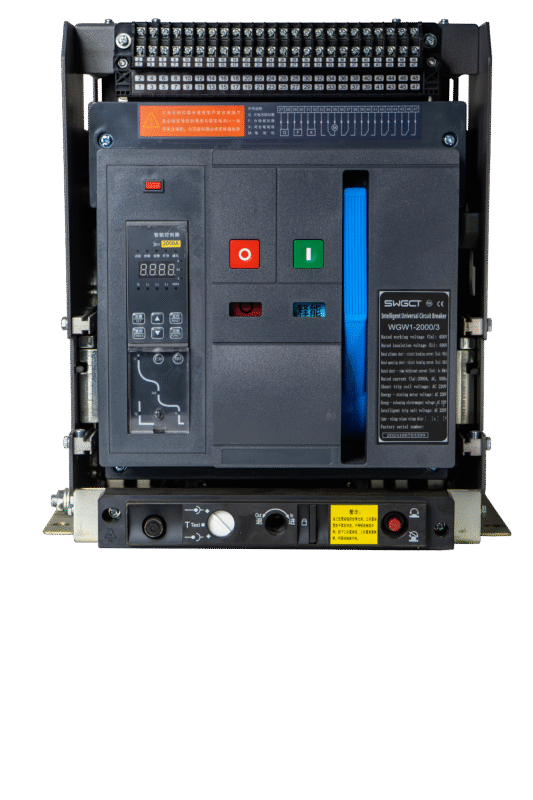
Fixed Type vs Draw-Out Type ACB
Fixed type breakers are permanently mounted. Draw-out types allow the breaker to be removed for maintenance without disconnecting cables.
Draw-out designs improve safety and reduce downtime. The choice depends on operational requirements and panel design.
Intelligent Trip Units and Digital Protection
Modern 1600A air-type universal circuit breakers use electronic or microprocessor-based trip units.
These intelligent units provide precise protection, data logging, and communication capabilities. They support advanced energy management strategies.
Arc Quenching and Safety Mechanisms
Arc chutes divide and cool the arc, extinguishing it efficiently. This reduces contact erosion and enhances safety.
Additional safety features include shutters, interlocks, and clear position indicators. These features protect operators during maintenance.
Integration with Monitoring and Control Systems
Air-type universal circuit breakers can integrate with SCADA and building management systems.
Remote monitoring provides real-time status and fault information. This integration supports proactive maintenance and faster response.
Installation in Low Voltage Distribution Panels
Proper installation is critical for performance. Adequate spacing, ventilation, and correct busbar connections are essential.
Installation should follow manufacturer guidelines. Professional installation ensures compliance and safety.
Electrical and Mechanical Performance Characteristics
The 1600A breaker is designed for high electrical endurance. It can withstand frequent operations and fault interruptions.
Mechanical durability ensures long service life. Reliable performance reduces lifecycle costs.
Compliance with IEC and UL Standards
Quality air-type universal circuit breakers comply with international standards such as IEC and UL.
Compliance ensures safety, performance, and acceptance by regulatory authorities. Certified products inspire confidence.
Maintenance Practices for Air-Type Universal Circuit Breaker
Routine maintenance includes inspection of contacts, cleaning arc chutes, and testing trip functions.
Preventive maintenance ensures readiness and extends service life. Maintenance schedules depend on operating conditions.
Common Faults and Troubleshooting
Common issues include contact wear and trip unit alarms. Diagnostic indicators assist troubleshooting.
Timely intervention prevents escalation. Proper training enhances maintenance effectiveness.
Energy Efficiency and Power Loss Considerations
Low contact resistance minimizes power losses. Efficient current paths reduce heat generation.
These efficiencies contribute to overall system performance. Energy savings accumulate over time.
Reliability in Continuous High Load Operation
The 1600A rating supports continuous high load operation. Thermal design ensures stable performance.
Reliability is essential in critical facilities. The air-type universal circuit breaker meets this demand.
Applications in Commercial Facilities
Commercial buildings use these breakers for main distribution. They support HVAC systems, elevators, and lighting.
Reliable protection ensures occupant safety and comfort.
Applications in Industrial Power Distribution
Industrial facilities rely on robust protection. The 1600A air-type universal circuit breaker handles heavy machinery loads.
Its durability supports demanding industrial environments.
Role in Data Centers and Critical Infrastructure
Data centers require high availability. The breaker protects UPS systems and main feeders.
Its selectivity and reliability support uptime objectives.
Environmental and Mechanical Durability
The breaker is designed to withstand temperature variations and mechanical stress.
Robust construction ensures consistent performance. Durability reduces replacement frequency.
Selecting the Right 1600A Air Circuit Breaker
Selection depends on breaking capacity, protection functions, and system architecture.
Professional assessment ensures correct specification. The right choice enhances safety and performance.
Cost Efficiency and Lifecycle Value
Although initial cost may be higher, lifecycle value is significant.
Reduced downtime, long service life, and safety benefits justify the investment.
Future Trends in Air Circuit Breaker Technology
Future designs will emphasize digitalization and connectivity.
Smart air circuit breakers will support predictive maintenance and energy analytics.
FAQs
What is an air-type universal circuit breaker 1600A?
It is a high-current circuit breaker using air for arc extinction.
Where is it used?
It is used in low voltage distribution panels.
Why choose 1600A rating?
It supports high current loads and system expansion.
Does it support intelligent protection?
Yes, modern models include digital trip units.
Is maintenance required?
Yes, periodic inspection is recommended.
Does it comply with standards?
Quality models comply with IEC and UL standards.
Conclusion
The Air-type universal circuit breaker 1600A for low voltage distribution panels is a vital component in modern power systems. It delivers robust protection, high reliability, and operational flexibility. Designed for demanding applications, it safeguards equipment, personnel, and infrastructure.
As electrical networks continue to evolve, the importance of dependable low voltage protection grows. Investing in a high-quality 1600A air-type universal circuit breaker ensures safety, performance, and long-term value.


