



ATS vs Manual Transfer Switch: Complete Guide for Power Backup Systems

Introduction: ATS vs Manual Transfer Switch Explained for Reliable Power Control
The ATS vs manual transfer switch comparison is essential for businesses, factories, commercial buildings, and facilities that require reliable backup power. Both solutions are designed to transfer electrical loads between the main power supply and backup sources, but they operate differently and provide different levels of convenience, automation, and protection.
When power interruptions occur, selecting the correct transfer solution can prevent downtime, protect sensitive equipment, and improve operational safety. Automatic transfer systems provide seamless switching, while manual solutions offer a simple and economical approach for smaller applications.
Understanding the differences between these two transfer technologies helps engineers, contractors, and facility managers choose the right equipment for their power requirements.
For reliable electrical products and protection solutions, you can explore SWGCT’s product range here:
Internal link:
https://swgct.net/product
Understanding Automatic and Manual Transfer Switch Technology
What Is an Automatic Transfer Switch (ATS)?
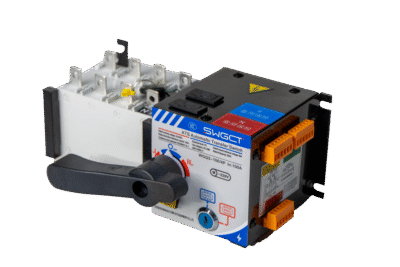
An automatic transfer switch is an electrical device that automatically detects power failure and transfers the load from the primary power source to a backup source, such as a generator.
The switching process usually happens within seconds without human intervention.
A typical ATS system includes:
- Power monitoring sensors
- Transfer mechanism
- Controller
- Circuit protection components
- Generator communication interface
Automatic transfer equipment is widely used in locations where uninterrupted power is critical.
Common applications include:
- Hospitals
- Data centers
- Manufacturing plants
- Commercial buildings
- Emergency facilities
According to electrical safety guidance from the National Fire Protection Association (NFPA), emergency power systems require reliable transfer mechanisms to maintain critical operations.
External reference:
https://www.nfpa.org/
What Is a Manual Transfer Switch?
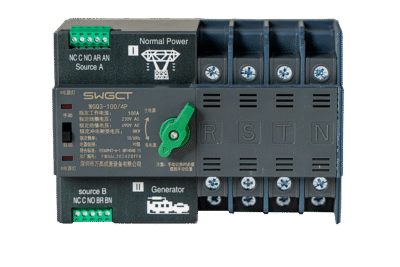
A manual transfer switch requires an operator to physically move the switch position when changing between power sources.
Unlike automatic systems, manual transfer equipment does not detect outages independently.
The operator must:
- Identify the power failure
- Access the switch
- Move the handle manually
- Confirm the backup source is active
Manual switches are commonly used for:
- Small businesses
- Residential backup generators
- Workshops
- Low-priority electrical systems
They provide a simple and affordable solution where automatic operation is not necessary.
ATS vs Manual Transfer Switch: Key Differences
ATS vs Manual Transfer Switch Operation Method
The biggest difference between these systems is how power transfer occurs.
| Feature | ATS | Manual Transfer Switch |
|---|---|---|
| Operation | Automatic | Manual |
| Human involvement | Not required | Required |
| Response time | Seconds | Depends on operator |
| Control method | Electronic controller | Physical switch |
Automatic systems provide faster response, while manual switches rely on user action.
Automatic Transfer Switch vs Manual Switch Reliability
For critical applications, reliability is one of the most important considerations.
An ATS continuously monitors electrical conditions and reacts immediately when abnormal conditions occur.
Advantages include:
- Faster power restoration
- Reduced downtime
- Improved emergency response
- Better protection for critical loads
Manual systems can also be reliable but depend heavily on operator availability and proper procedures.
ATS and Manual Transfer Switch Cost Comparison
Cost is another major factor when selecting a transfer system.
Automatic Transfer Switch
Advantages:
- Higher convenience
- Advanced monitoring
- Better automation
Limitations:
- Higher purchase cost
- More complex installation
Manual Transfer Switch
Advantages:
- Lower initial investment
- Simple installation
- Easy maintenance
Limitations:
- Requires human operation
- Slower response during emergencies
For budget-conscious projects, manual solutions may be suitable. However, facilities requiring continuous operation often prefer automatic systems.
Applications of ATS and Manual Transfer Switch Systems
Industrial Power Transfer Applications
Factories often depend on continuous electricity for production equipment.
Automatic transfer solutions are commonly installed because unexpected shutdowns can cause:
- Production losses
- Equipment damage
- Safety risks
Heavy industries usually require reliable switching systems combined with circuit protection products.
Commercial Building Applications
Office buildings, shopping centers, and hotels frequently use backup generators.
Automatic transfer equipment ensures essential systems remain operational, including:
- Lighting
- Security systems
- Elevators
- Communication equipment
Residential Backup Power Applications
For homes and small properties, manual transfer switches are often sufficient.
They provide:
- Affordable generator connection
- Basic electrical safety
- Easy operation
How to Choose Between ATS and Manual Transfer Switch
Factors to Consider Before Selection
When comparing automatic and manual transfer solutions, consider:
Power Requirements
Large facilities generally require automatic operation.
Budget
Manual systems provide lower upfront costs.
Critical Load Importance
If power interruption creates serious consequences, ATS is usually preferred.
Maintenance Requirements
Automatic systems require professional inspection, while manual switches are easier to maintain.
Advantages of Automatic Transfer Switch Systems
Automatic transfer solutions provide several benefits:
1. Faster Power Restoration
The system reacts immediately after detecting failure.
2. Improved Safety
Operators do not need to manually access electrical equipment during emergencies.
3. Better Equipment Protection
Stable power switching helps protect sensitive electrical devices.
Advantages of Manual Transfer Switch Systems
Manual transfer solutions remain popular because they offer:
1. Affordable Installation
They require fewer components compared with automated systems.
2. Simple Maintenance
Their mechanical design makes inspection easier.
3. Suitable Small Applications
They are ideal where power interruptions are occasional.
Circuit Protection and Transfer Switch Systems
Both automatic and manual transfer equipment require proper circuit protection.
A complete electrical system may include:
- Circuit breakers
- Protective relays
- Surge protection devices
- Distribution equipment
SWGCT provides professional electrical products designed for power distribution applications.
Visit:
For circuit protection solutions, you can also explore:
https://swgct.net/product-category/circuit-breaker
Common Mistakes When Selecting Transfer Equipment
Choosing Based Only on Price
The cheapest option may not provide enough protection.
Ignoring Load Requirements
Incorrect sizing can cause failures.
Neglecting Maintenance
Regular inspection improves reliability.
Using Manual Systems for Critical Applications
Important facilities often require automatic switching capability.
Future Trends in Transfer Switch Technology
Modern power transfer systems are becoming smarter with:
- Remote monitoring
- IoT connectivity
- Digital controllers
- Energy management integration
Future systems will provide better visibility, predictive maintenance, and improved energy efficiency.
FAQs About ATS vs Manual Transfer Switch
1. What is the main difference between ATS and manual transfer switch?
The main difference is operation. ATS automatically transfers power during outages, while manual switches require human operation.
2. Which transfer switch is better for generators?
For emergency generators used in critical facilities, automatic transfer switches are usually the better choice.
3. Is a manual transfer switch cheaper than ATS?
Yes. Manual systems generally have lower purchase and installation costs.
4. Can ATS work without a generator?
Yes. ATS can switch between different power sources depending on system design.
5. How long does an ATS take to transfer power?
Most systems transfer power within a few seconds after detecting failure.
6. Do transfer switches need maintenance?
Yes. Regular testing and inspection help ensure reliable operation.
Conclusion: Choosing the Right Power Transfer Solution
The ATS vs manual transfer switch decision depends on application requirements, budget, and the importance of continuous power availability.
Automatic transfer switches provide convenience, speed, and reliability for critical systems, while manual transfer switches offer a practical and affordable option for smaller applications.
By understanding the differences between automatic and manual power transfer solutions, businesses can build safer and more reliable electrical systems.
For professional electrical products and power solutions, visit: