



Automatic Transfer Switch (ATS): The Unsung Hero of Uninterrupted Power

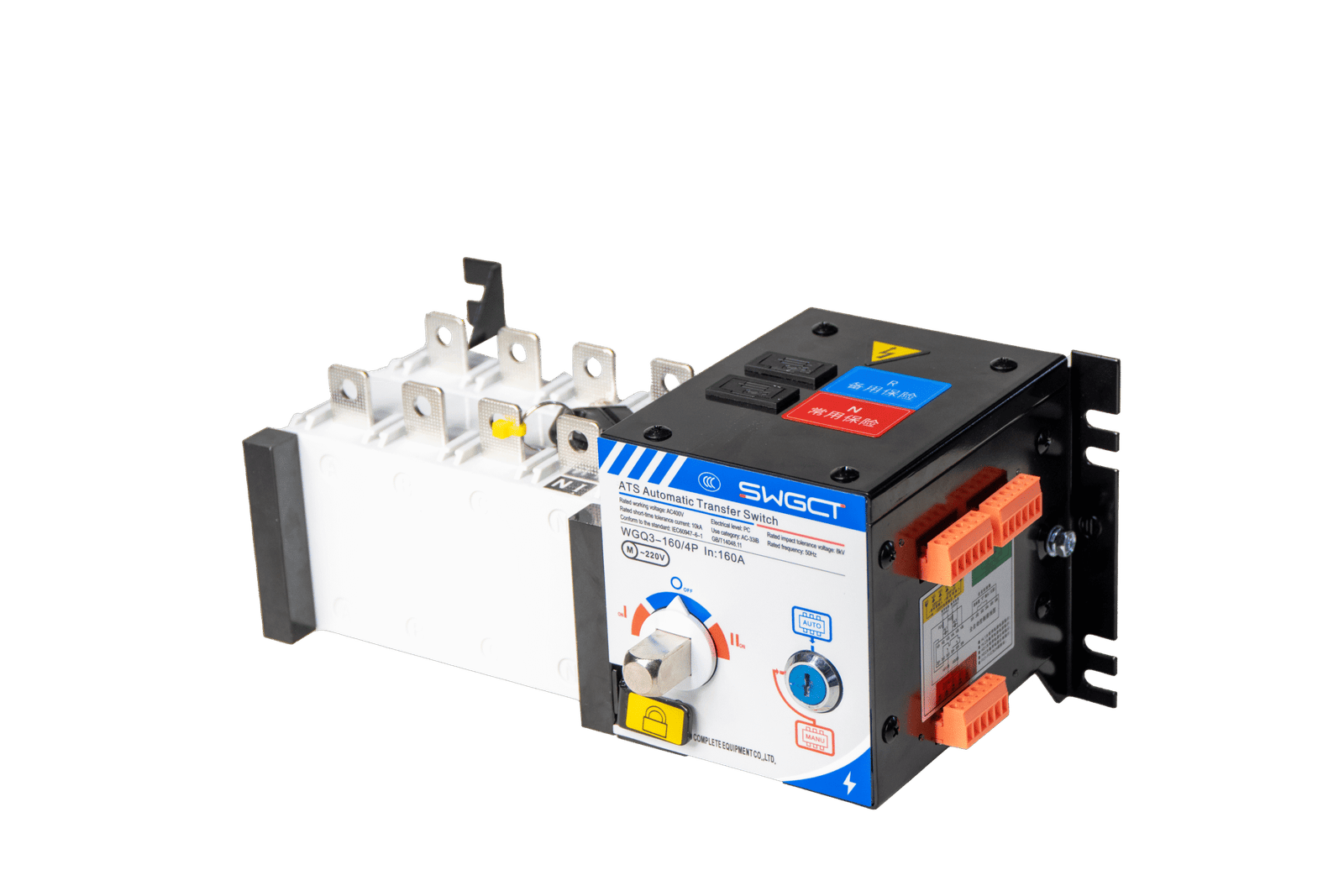
In a world that runs on electricity, a power outage is more than an inconvenience—it can mean lost data, spoiled inventory, halted production, or even life-threatening danger in critical facilities. Bridging the gap between a power failure and the restoration of electricity is a critical device known as the Automatic Transfer Switch (ATS).
This comprehensive, SEO-optimized guide will explore what an ATS is, how it works, the different types available, its key components, applications, and future trends in power continuity.
What Is an Automatic Transfer Switch (ATS)?
An Automatic Transfer Switch (ATS) is an electrical switch that automatically transfers a load from a primary power source (typically the utility grid) to a secondary, emergency power source (like a generator or battery bank) when it detects a failure in the primary source. Once the primary power is restored and stabilized, the ATS seamlessly transfers the load back.
Think of it as an instantaneous, intelligent traffic cop for electricity, ensuring that critical systems never experience a significant power interruption.
How Does an Automatic Transfer Switch Work?
The operation of an ATS is a carefully orchestrated sequence of monitoring, decision-making, and switching. Here is the step-by-step process:
- Normal Operation: The ATS connects the facility’s electrical panel directly to the utility power. The ATS continuously monitors the voltage and frequency of the incoming utility supply.
- Failure Detection: The ATS’s internal controller (the “brain”) detects a fault condition, such as a voltage sag, swell, outage, or frequency deviation beyond preset limits.
- Signal to Emergency Source: Upon detecting a failure, the ATS sends a start signal to the emergency power source (e.g., a diesel generator).
- Source Qualification: The ATS does not switch immediately. It waits for the emergency source (generator) to start, warm up, and stabilize its voltage and frequency within acceptable parameters.
- Transfer: Once the emergency source is verified as “healthy,” the ATS opens the contacts to the utility and closes the contacts to the generator. Power is now supplied to the load.
- Utility Restoration Monitoring: The ATS continues to monitor the utility power. Once it detects that the utility has returned and remained stable for a set period (e.g., 5–10 minutes), it begins the retransfer process.
- Retransfer: It signals the generator to shut down and switches the load back to the utility source.
Key Components of an Automatic Transfer Switch
| Component | Function |
|---|---|
| Main Contacts | Heavy-duty electrical contacts that physically connect the load to either the Normal or Emergency source. Often includes arc chutes for interruption. |
| Controller / Logic Panel | The microprocessor-based brain. It monitors power quality, executes timers, manages the transfer sequence, and communicates with the generator. |
| Power Monitoring Sensors | Voltage and frequency sensors that constantly feed data to the controller. |
| Operating Mechanism | The motor, solenoid, or spring-charged mechanism that physically moves the contacts. |
| Bypass/Isolation Switch | Allows the ATS to be bypassed for maintenance, connecting the load directly to one source. |
| Enclosure | A NEMA-rated (e.g., NEMA 1, 3R, 4) cabinet protecting internal components from dust, water, and physical damage. |
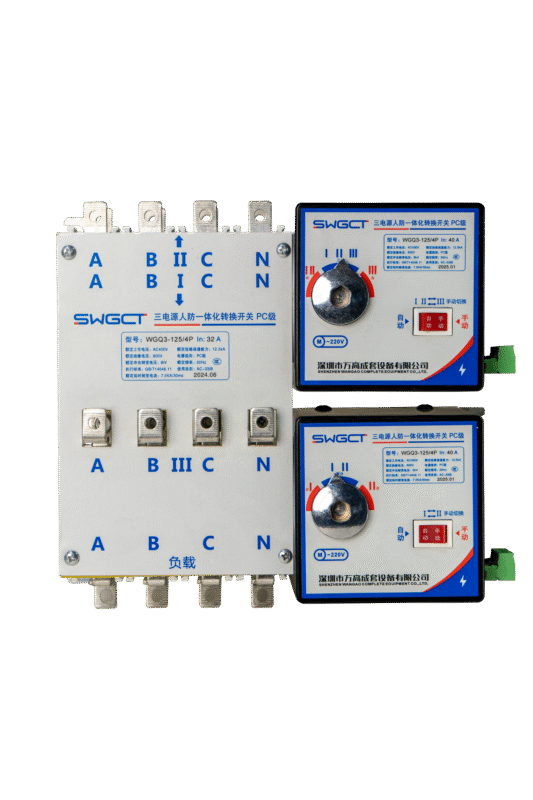
Types of Automatic Transfer Switches
1. Open Transition (Break-Before-Make)
- Mechanism: The connection to the primary source is completely broken beforethe connection to the secondary source is made. There is a brief moment (typically 1–5 cycles) where the load is de-energized.
- Use Case: Most common type for general-purpose applications where a momentary power blink is acceptable (e.g., commercial buildings, industrial plants).
2. Closed Transition (Make-Before-Break)
- Mechanism: The switch briefly connects to both power sources simultaneously before disconnecting the primary source. This requires the two sources to be synchronized (same voltage, frequency, and phase).
- Use Case: Critical facilities like data centers, hospitals, and semiconductor fabs where even a millisecond of power interruption is unacceptable.
3. Static Transfer Switch (STS)
- Mechanism: Uses silicon-controlled rectifiers (SCRs) or thyristors instead of mechanical contacts. This allows for extremely fast switching (sub-cycle, <1/4 cycle).
- Use Case: Ultra-critical, high-speed switching for server farms and sensitive electronics.
- Limitation: Typically limited to lower voltages and amperages compared to electromechanical switches.
4. Soft Load Transfer
- Mechanism: Gradually transfers the load from one source to another, ramping the voltage up on the new source and down on the old one. Prevents large inrush currents.
- Use Case: Large motor loads or generator testing.
Applications of Automatic Transfer Switches
- Hospitals & Healthcare: Life support systems, operating rooms, and ICU equipment cannot tolerate power loss.
- Data Centers: Servers require 99.999% uptime; an ATS is fundamental to their power architecture.
- Telecommunication Towers: Ensuring continuous cellular and internet service.
- Industrial & Manufacturing: Preventing production line shutdowns, which can cost thousands per minute.
- Commercial Buildings: Elevators, security systems, and emergency lighting.
- Residential (Whole-Home Backup): Increasingly popular for homes with standby generators.
How to Choose the Right ATS
- Voltage & Amperage Rating: Must match the service entrance or generator output (e.g., 120/240V single-phase, 480V three-phase, 100A, 400A, 2000A).
- Number of Poles: Based on the electrical system (2-pole for 240V, 3-pole for 3-phase without neutral, 4-pole for 3-phase with neutral).
- Transition Type: Decide between Open (standard) and Closed (critical) transition.
- Enclosure Rating (NEMA):
- NEMA 1: Indoor, general purpose.
- NEMA 3R: Outdoor, rain-tight.
- NEMA 4: Indoor/outdoor, watertight.
- Controller Features: Look for features like programmable timers, remote monitoring (via Modbus, Ethernet), and detailed event logging.
- Source Compatibility: Ensure the ATS can properly monitor your specific utility and generator types.
Maintenance and Testing
An ATS is a mechanical device that requires periodic maintenance to ensure reliability.
- Monthly Exercise: Most generators and ATS units have an automatic monthly self-test.
- Visual Inspection: Check for loose connections, corrosion, or physical damage.
- Operational Testing: Manually initiate a simulated power failure to verify the entire transfer sequence.
- Contact Inspection: Inspect and clean main contacts for pitting or burning.
- Software Updates: For smart ATS controllers, ensure firmware is up-to-date.
Future Trends in ATS Technology
- Smart Grid Integration: ATS units communicating with utility smart grids to manage demand response programs.
- IoT & Predictive Maintenance: Sensors monitoring contact wear and predicting failures before they happen.
- Microgrid Compatibility: Managing power transfer between the grid, solar, battery storage, and generators in complex microgrids.
- Cybersecurity: Hardening ATS network interfaces against hacking attempts.
- Solid-State Dominance: Continued growth of STS in commercial and industrial applications due to speed and reliability.
Conclusion
The Automatic Transfer Switch (ATS) is the indispensable link between a power disruption and uninterrupted operations. It is a sophisticated device that embodies the principles of reliability and safety in electrical engineering. By understanding the different types, components, and selection criteria, facility managers and homeowners can ensure their critical systems remain powered, productive, and protected against the uncertainties of the electrical grid.
As technology advances, the ATS will evolve from a simple switch into an intelligent, connected node in the smart energy ecosystems of the future.


