



Earth Leakage Circuit Breaker (ELCB): A Comprehensive Guide to Shock and Fire Protection

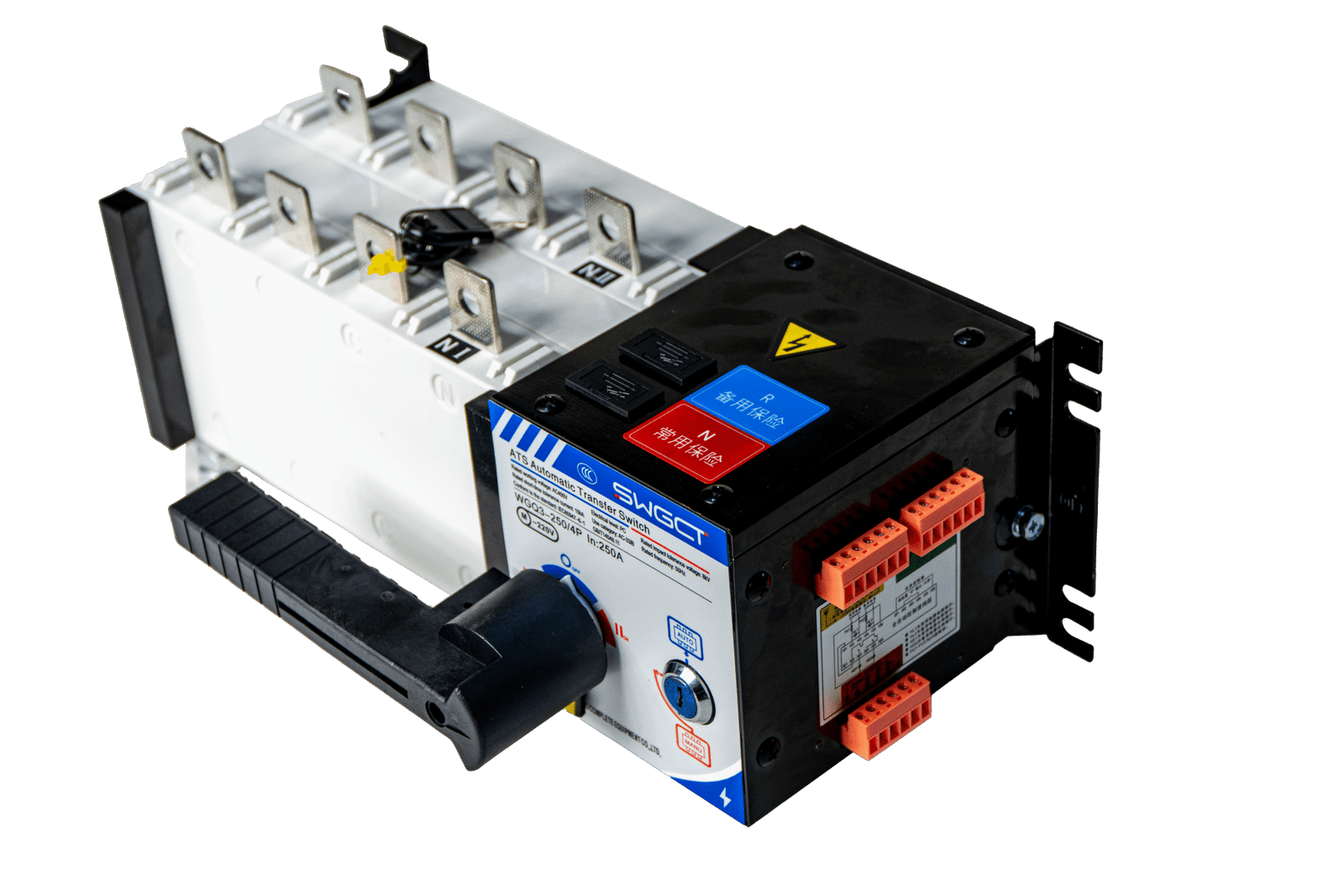
In modern electrical installations, ensuring human safety and preventing fire hazards caused by insulation faults is a top priority. One of the earliest and most effective devices developed for this purpose is the Earth Leakage Circuit Breaker (ELCB). Designed to detect small stray currents flowing to earth—often due to damaged insulation or accidental contact with live parts—ELCBs provide critical protection in residential, commercial, and industrial electrical systems.
In this detailed, SEO-optimized article, we’ll explore what an ELCB is, how it works, its types, components, advantages, limitations, applications, comparison with other protective devices, installation guidelines, maintenance tips, and future trends.
What Is an Earth Leakage Circuit Breaker (ELCB)?
An Earth Leakage Circuit Breaker (ELCB) is a protective device that monitors the current flowing through the live (phase) and neutral conductors of an electrical circuit. If it detects an imbalance—indicating that some current is leaking to earth (ground) through an unintended path—it quickly disconnects the circuit to prevent electric shock, fire, or equipment damage.
ELCBs were first introduced in the 1950s and became a standard safety measure in electrical systems worldwide. They are a subset of Residual Current Devices (RCDs), but with a key distinction in their sensing method, as we’ll discuss later.
How Does an ELCB Work?
The core principle behind an ELCB is current balance detection:
- Normal Operation In a healthy circuit, the current entering the load through the live wire returns via the neutral wire, resulting in equal and opposite currents.
- Leakage Occurs If a fault develops—such as a person touching a live conductor, damaged cable insulation, or moisture ingress—a portion of the current bypasses the neutral and flows to earth.
- Imbalance Detection The ELCB senses the difference between the live and neutral currents. This difference, called the residual current, is typically in the range of milliamps (mA).
- Tripping Action When the residual current exceeds a preset threshold (e.g., 30 mA), the ELCB’s sensing mechanism triggers a rapid disconnection of the circuit—usually within 20–300 milliseconds—to prevent injury or fire.
Types of Earth Leakage Circuit Breakers
1. Voltage-Operated ELCB (Old Type)
- Detection Method: Monitors voltage on the earthing conductor (protective earth wire).
- Operation: If a leakage current flows to earth, it creates a voltage drop across the earth impedance. The ELCB detects this voltage and trips.
- Limitation: Only protects circuits connected to the same earthing conductor; ineffective if the fault current bypasses the PE wire.
- Status: Largely obsolete; replaced by current-operated RCDs/ELCBs.
2. Current-Operated ELCB (Modern Type)
- Detection Method: Uses a core balance transformer (toroid) around all live and neutral conductors to detect current imbalance.
- Operation: Any residual current produces a magnetic flux in the toroid, inducing a current in the secondary winding that activates the trip coil.
- Advantage: Detects leakage regardless of the path to earth; more reliable and widely used today.
- Note: Often referred to simply as an RCD or RCBO when combined with overcurrent protection.

Key Components of a Current-Operated ELCB
| Component | Function |
|---|---|
| Core Balance Transformer | Surrounds live and neutral wires; detects current imbalance. |
| Electronic Sensing Circuit | Amplifies and processes the residual current signal. |
| Trip Coil | Receives signal to mechanically open the contacts. |
| Contacts | Copper or silver alloy; carry current and open during tripping. |
| Operating Mechanism | Spring-loaded system for fast contact separation. |
| Test Button | Simulates a leakage current to verify functionality. |
| Reset Button | Recloses the contacts after fault clearance. |
| Housing | Insulating plastic enclosure for safety and durability. |
Advantages of Earth Leakage Circuit Breakers
1. Electric Shock Prevention
Rapidly disconnects circuits when leakage current exceeds safe levels (e.g., 30 mA), reducing the risk of fatal electrocution.
2. Fire Hazard Reduction
Detects small leakage currents that can overheat cables or connections, preventing insulation breakdown and fires.
3. Equipment Protection
Shields sensitive electronics and appliances from damage caused by ground faults.
4. Compliance with Safety Standards
Mandatory in many countries for residential, commercial, and industrial electrical installations (e.g., IEC 61008, NEC Article 210.8).
5. Easy Testing
Built-in test button allows users to verify proper operation monthly.
Limitations of ELCBs
- Not Foolproof: Cannot detect leakage currents that return via the neutral wire (only applies to old voltage-operated types).
- Requires Proper Earthing: Effectiveness depends on a low-impedance earth connection.
- Sensitivity to Harmonics: Some electronic loads may cause nuisance tripping.
- Limited Fault Current Capacity: Must be backed by overcurrent protection for high-fault scenarios.
- Installation Errors: Incorrect wiring (e.g., missing neutral through toroid) renders the device ineffective.
Comparison: ELCB vs. RCD vs. RCBO
| Feature | Earth Leakage Circuit Breaker (ELCB) | Residual Current Device (RCD) | Residual Current Breaker with Overcurrent (RCBO) |
|---|---|---|---|
| Detection Method | Current balance (modern) / Voltage (old) | Current balance | Current balance |
| Overcurrent Protection | ❌ No (unless combined) | ❌ No | ✅ Yes |
| Protection Scope | Whole installation or subcircuit | Subcircuit or final circuit | Final circuit (overload + leakage) |
| Sensitivity | Adjustable (10–300 mA) | Adjustable (10–300 mA) | Adjustable (10–300 mA) |
| Common Use | Older installations, some industrial | Modern distribution boards | Final circuit protection in homes/commercial |
| Integration | Standalone or with MCB | Standalone | Integrated unit |
Applications of ELCBs
Residential Buildings
- Power sockets (especially in bathrooms, kitchens, and outdoor areas)
- Water heaters and showers
- Lighting circuits in damp locations
Commercial & Public Buildings
- Office electrical systems
- Shopping malls and retail stores
- Hospitals and schools
Industrial Facilities
- Machine tools and conveyor systems
- Chemical plants and workshops
- Server rooms and data centers
Special Environments
- Marinas and swimming pools (where water increases shock risk)
- Construction sites (temporary power supplies)
- Agricultural facilities (moisture-prone environments)
How to Choose the Right ELCB
- Type – Prefer current-operated ELCBs (effectively RCDs) over old voltage-operated models.
- Rated Residual Operating Current (IΔn) –
- 10 mA: High-sensitivity (bathrooms, medical)
- 30 mA: General use (IEC 61008 standard)
- 100–300 mA: Fire protection in distribution boards
- Poles – 2-pole (single-phase) or 4-pole (three-phase) as per system voltage.
- Breaking Capacity – ≥ 4.5 kA for domestic; 6–10 kA for commercial/industrial.
- Certifications – Look for IEC 61008, CE, UL, or local regulatory marks.
- Integration – For combined overcurrent and leakage protection, choose an RCBO.
Installation Guidelines
- Correct Wiring – Ensure all live and neutral conductors pass through the core balance transformer.
- Protective Earth (PE) – Connect to the earthing bar; do not route PE through the toroid.
- Load Balancing – Avoid overloading the protected circuit.
- Accessibility – Install in a location where the test/reset buttons are easily reachable.
- Professional Installation – Always hire a licensed electrician to comply with local codes.
Maintenance & Testing
- Monthly Test Button Press – Confirms leakage detection and tripping mechanism.
- Annual Inspection – Check for loose terminals, overheating signs, or physical damage.
- Cleanliness – Remove dust from the housing and toroid to prevent false trips.
- Replacement – Replace if tripping becomes unreliable or delayed.
Future Trends in ELCB Technology
- Smart ELCBs – Integration with IoT for remote monitoring, alerts, and usage analytics.
- Adjustable Sensitivity – Models with variable IΔn settings for flexible applications.
- Enhanced DC Detection – Type B RCDs/ELCBs for EV chargers and solar PV systems.
- Compact Modular Designs – Smaller footprints for high-density consumer units.
- Energy Efficiency – Lower power consumption during standby.
Conclusion
The Earth Leakage Circuit Breaker (ELCB) has played a pivotal role in electrical safety for decades, evolving from early voltage-operated designs to today’s sophisticated current-operated devices. While modern terminology often favors RCD or RCBO, the ELCB remains a vital concept in protecting lives and property from electric shock and fire hazards.
Whether upgrading an old installation or designing a new system, incorporating the right type of ELCB—preferably as part of an RCBO—ensures compliance with safety standards and peace of mind. As technology advances, ELCBs will continue to adapt, becoming smarter, more reliable, and even more essential to our electrified world.


