



Molded Case Leakage Circuit Breakers: Advanced Protection for Modern Electrical Systems


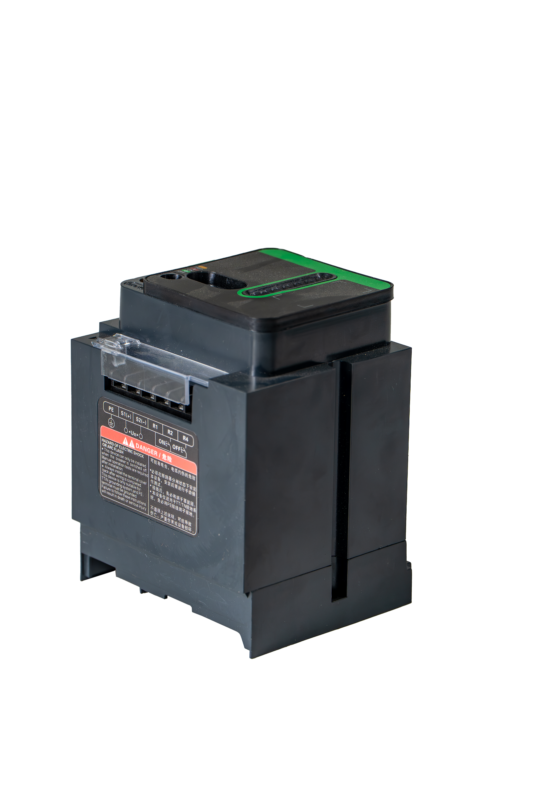
In today’s complex electrical networks, safety goes beyond simply preventing overloads and short circuits. Molded Case Leakage Circuit Breakers (MCCB-Ls) represent a significant evolution in protection technology, combining the robust performance of traditional molded case circuit breakers with advanced earth-leakage detection. These devices are essential for safeguarding people, equipment, and infrastructure in environments where electrical faults can pose serious risks.
In this detailed, SEO-optimized article, we’ll explore what MCCB-Ls are, how they work, their benefits, applications, selection criteria, and maintenance tips.
What Is a Molded Case Leakage Circuit Breaker?
A Molded Case Leakage Circuit Breaker is an integrated device that merges two critical protective functions into a single, rugged unit:
- Overcurrent & Short-Circuit Protection – Provided by the core molded case circuit breaker (MCCB) mechanism.
- Earth-Leakage Protection – Continuously monitors current balance between live and neutral conductors, tripping the circuit if leakage to ground is detected.
Encased in a durable, thermoset plastic housing, MCCB-Ls are designed for high-current applications where both power reliability and personal safety are paramount.
How Do MCCB-Ls Work?
The operation of an MCCB-L involves two synchronized systems:
1. Overcurrent Protection (MCCB Function)
- Thermal Trip: A bimetallic strip bends under sustained overloads, delaying the trip to allow brief surges while protecting against prolonged excess current.
- Magnetic Trip: An electromagnet instantly releases the latch during short-circuit conditions, interrupting current in milliseconds.
2. Earth-Leakage Protection (RCD Function)
- A residual current transformer (ZCT) surrounds all live and neutral conductors.
- Under normal conditions, the current in equals the current out.
- If some current escapes to ground (through a fault, damaged insulation, or human contact), the ZCT detects the imbalance.
- When the leakage current exceeds a preset threshold (e.g., 30mA, 100mA, 300mA), the breaker trips, isolating the faulty circuit.
This dual-action mechanism ensures comprehensive protection in a single, space-saving device.
Key Benefits of MCCB-Ls
1. Integrated Safety in One Unit
Combines MCCB and RCD functions, reducing panel space, simplifying wiring, and lowering installation costs.
2. High Breaking Capacity
Retains the high interrupting capacity of industrial MCCBs (up to 100kA), making it suitable for heavy-duty applications.
3. Adjustable Sensitivity & Trip Time
Industrial-grade MCCB-Ls allow customization of leakage current thresholds and time delays, preventing nuisance tripping in inductive loads.
4. Robust Construction
Thermoset plastic casings resist heat, chemicals, and mechanical stress, ideal for harsh industrial or outdoor environments.
5. Enhanced Protection for People & Equipment
Detects both overcurrents and earth faults, significantly reducing the risk of electric shock, fire, and equipment damage.
Applications of MCCB-Ls
MCCB-Ls are used in settings where high power and high safety are both required:
- Industrial Plants – Protects motors, compressors, and control panels from insulation failure.
- Water Treatment & Swimming Pools – Mandatory in wet areas to prevent fatal electric shocks.
- Data Centers – Isolates faults in server racks and UPS systems without disrupting entire operations.
- Renewable Energy Systems – Ensures safety in solar farm combiner boxes and wind turbine nacelles.
- Commercial Buildings – Protects large HVAC systems, elevators, and emergency lighting circuits.
How to Choose the Right MCCB-L
- Rated Current (In) – Match the breaker’s current rating to the circuit’s maximum load.
- Rated Voltage (Vn) – Ensure compatibility with your system voltage (e.g., 400V AC three-phase).
- Residual Operating Current (IΔn) – Choose 30mA for personal protection, 100–300mA for fire prevention.
- Breaking Capacity (Icu/Ics) – Must exceed the prospective short-circuit current at the installation point.
- Trip Curve Characteristics – Adjustable curves improve selectivity and reduce downtime.
- Certifications – Look for compliance with IEC 61009, UL 1053, or equivalent standards.
Maintenance Tips for Longevity
- Monthly Test Button Press – Confirms leakage trip functionality.
- Annual Professional Inspection – Checks for loose terminals, corrosion, or reduced sensitivity.
- Avoid Overloading Circuits – Excess load accelerates wear on thermal elements.
- Replace After Major Surges – Lightning strikes or grid faults may degrade internal components.
Conclusion
Molded Case Leakage Circuit Breakers are indispensable for modern electrical safety, delivering robust overcurrent protection alongside life-saving earth-leakage detection. Their versatility, durability, and compliance with international standards make them the smart choice for industrial, commercial, and critical infrastructure applications.
Investing in quality MCCB-Ls—and maintaining them properly—ensures uninterrupted power and protects both people and assets from electrical hazards.


