



Introduction
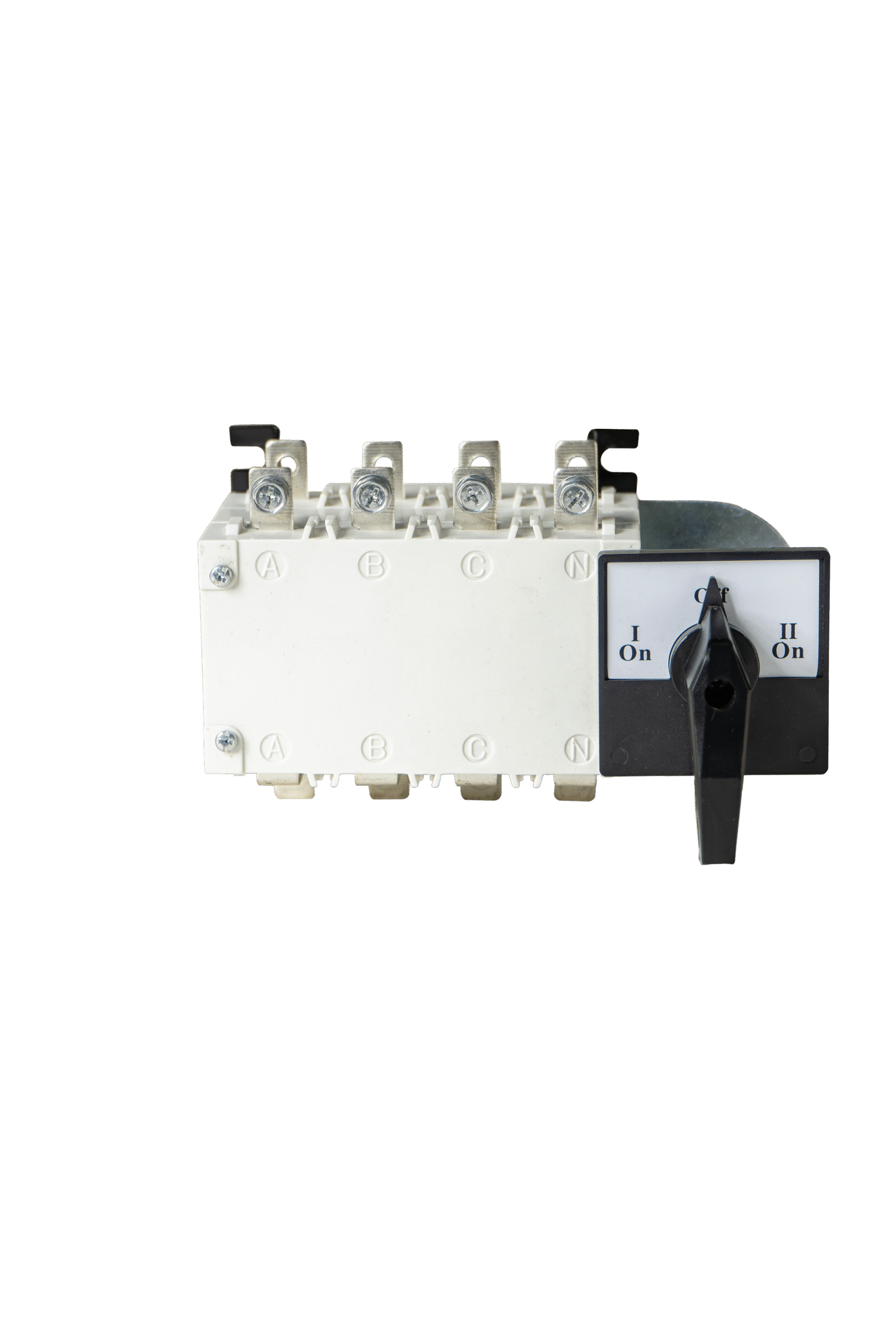
In electrical systems where power continuity is managed through redundancy, the ability to safely and decisively control the power path is fundamental. The Manual Double-Throw Disconnect Switch, often referred to as a Manual Dual-Source Transfer Switch, is the cornerstone of this control. It is a purely electromechanical device engineered to manually transfer a load circuit between two independent power sources—such as Utility and Generator, or between two separate feeders. Unlike automated systems, its operation is intentional, direct, and provides absolute physical and visual confirmation of the circuit state. With its fail-safe mechanical interlock and visible break design, it is the preferred choice for applications requiring uncompromising safety, operational simplicity, and long-term reliability without dependency on control electronics.
Core Design Principles and Operational Advantages
1. Definitive Manual Control and Source Selection
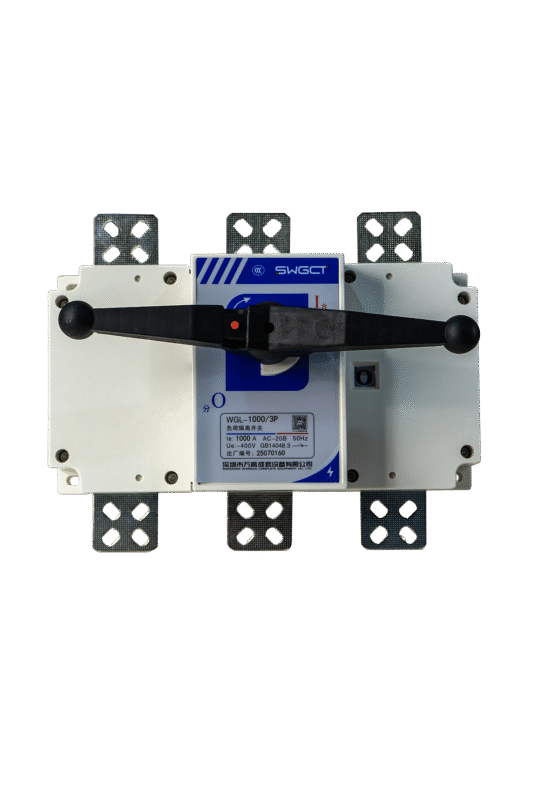
Feature: A heavy-duty rotary or lever-operated handle provides three distinct, positively-detented positions: SOURCE 1 – OFF – SOURCE 2. This intuitive interface gives the operator complete and direct command over the power path.
Benefit:** Eliminates ambiguity and automation complexity. The operator has tactile and visual confirmation of the selected source, enabling deliberate operational changes or safe isolation for maintenance.
2. Ultimate Safety Through Visible Isolation and Interlocking
Feature: The switch incorporates a mechanically interlocked “break-before-make” mechanism. It is impossible to connect to SOURCE 2 without first fully disconnecting from SOURCE 1, passing through the central “OFF” position which provides a visible air gap between contacts. The handle is typically padlockable in the OFF position.
Benefit:** Guarantees safe isolation for maintenance (LOTO compliance) and prevents catastrophic paralleling of two unsynchronized power sources, protecting personnel, equipment, and the sources themselves. This meets the core requirements of safety standards like NFPA 70E and OSHA.
3. Robust Construction for Demanding Electrical Duty
Feature: Built with high-conductivity, silver-plated copper contacts and a durable switching mechanism designed for high making and breaking capacity. Enclosures are rated for industrial environments (e.g., IP65, NEMA 3R/4X for outdoor use).
Benefit:** Ensures reliable performance under full load current and long service life, even in harsh conditions. The robust design minimizes contact resistance and heating, ensuring stable operation.
4. Application Versatility and Configuration Flexibility
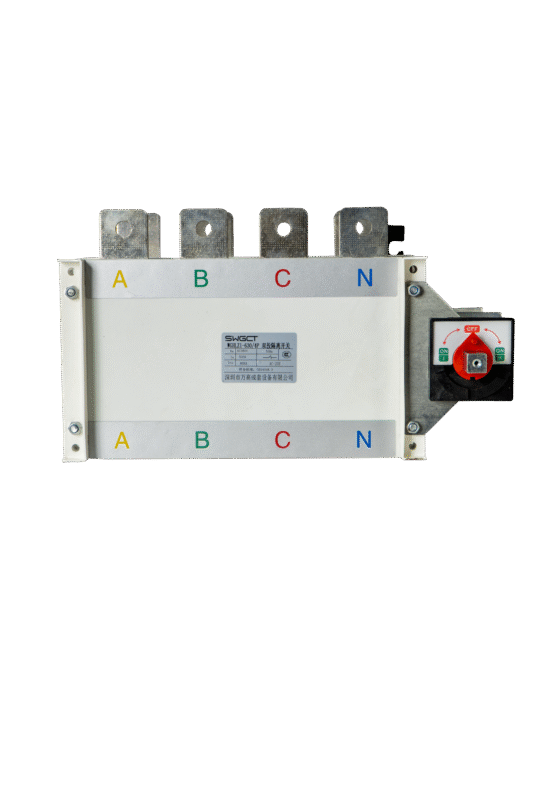
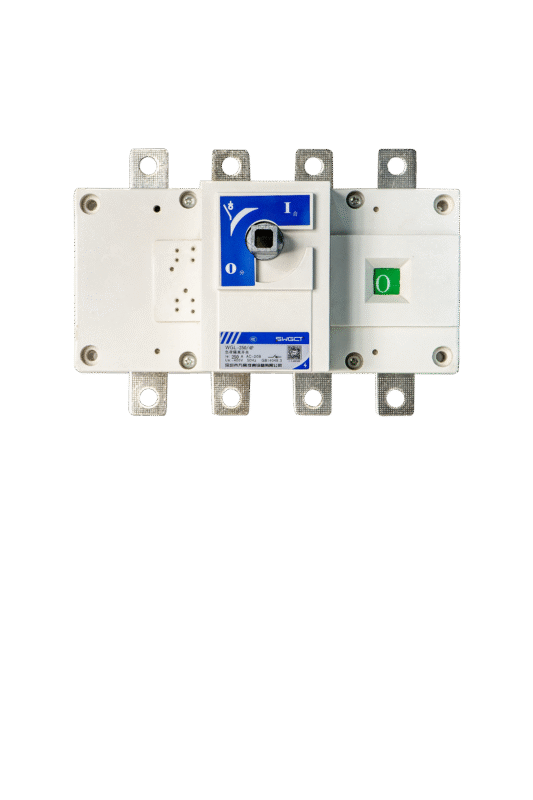
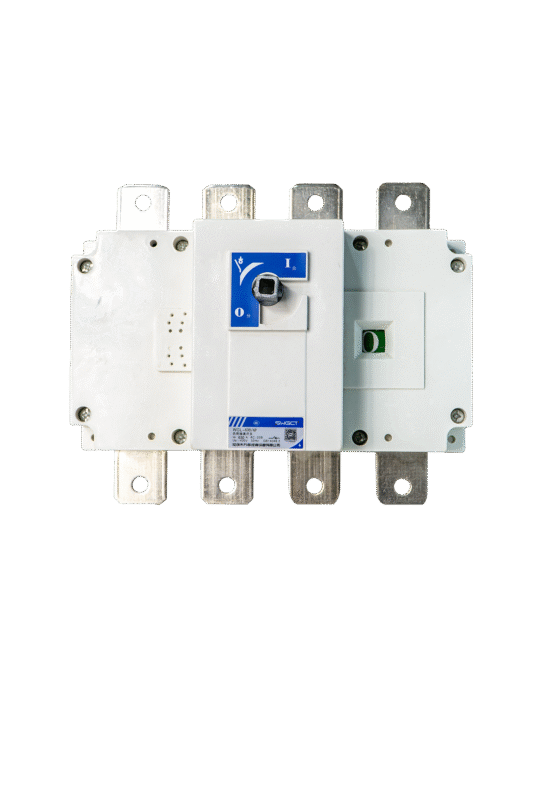
Feature: Available in a wide range of current ratings (from 32A to 1600A+) and pole configurations (2P, 3P, 3P+N, 4P). Can be supplied as an open-frame component for panel builders or in a self-contained, enclosed assembly.
Benefit:** Serves a vast array of applications, from small generator inlets to main power switching in industrial plants. The 4-pole (3P+N) version is essential for modern three-phase systems where the neutral must be switched to ensure complete isolation.
Technical Specifications (Generic Range)
| Parameter | Typical Specification Range |
|---|---|
| Type | Manual, Double-Throw Disconnect Switch |
| Rated Operational Current (Ie) | 32A, 63A, 100A, 160A, 250A, 400A, 630A, 800A, 1000A, 1250A, 1600A |
| Rated Operational Voltage (Ue) | 230V AC, 400V AC, 480V AC, 690V AC |
| Poles | 2P, 3P, 4P (3 Phase + Neutral) |
| Utilization Category | AC-22A / AC-23A (For switching mixed resistive and inductive loads) |
| Short-Time Withstand Current (Icw) | Varies by model; e.g., 10kA to 65kA for 1 second |
| Mechanical Life | 10,000 to 30,000 operations |
| Electrical Life | 1,500 to 5,000 operations at rated current |
| Enclosure Protection | IP00 (Open), IP65, NEMA 1, 3R, 4X, 12 |
| Control/Position | Rotary Handle or Lever with Clear Indication |
| Standards | IEC 60947-3, UL 98, CSA C22.2, GB 14048.3 |
Primary Applications
-
Standby Generator Connection: The primary manual transfer switch for connecting a building’s load to a generator.
-
Automatic Transfer Switch (ATS) Bypass: Installed in parallel with an ATS to provide a manual maintenance bypass, allowing the ATS to be serviced without cutting power to the load.
-
Source Selection for Critical Equipment: Manually selecting between two separate utility feeds or between a normal and an emergency panel for specific high-importance loads.
-
Maintenance Disconnect for Dual-Fed Systems: Providing a single, lockable point to isolate equipment that can be powered from one of two different distribution boards.
-
Industrial Process Switching: Manually changing the power source for a production line or large machine between two supply points.
Value Proposition
-
Safety First: Provides the highest level of personnel safety through visible isolation and mechanical interlocks, forming the basis of any compliant electrical safety program.
-
Simplicity Equals Reliability: With no control boards, software, or sensors to fail, it offers a fundamentally reliable solution with minimal maintenance requirements.
-
Operational Clarity and Control: Gives facility personnel direct, unambiguous control over the power source, which is invaluable during planned maintenance or emergency operations.
-
Cost-Effective Redundancy and Flexibility: A highly cost-effective solution for creating a manual backup to an automated system or for applications where automatic transfer is not justified.
Selection and Installation Guidance
-
Key Selection Criteria: Determine the continuous current rating, number of poles required (3P or 4P), short-circuit withstand rating of the installation point, and the enclosure rating for the environment.
-
Professional Installation Required: Must be installed by a qualified electrician. Proper sizing and coordination with upstream overcurrent protective devices (fuses/circuit breakers) are essential.
-
This is a Switch, Not a Protector: It does not provide overcurrent or short-circuit protection. It must be protected by appropriately rated devices on each incoming power source.




Rezensionen
Es gibt noch keine Rezensionen.