


Miniature Leakage Circuit Breaker (MLCB): The Compact Guardian of Electrical Safety in Modern Homes and Commercial Spaces

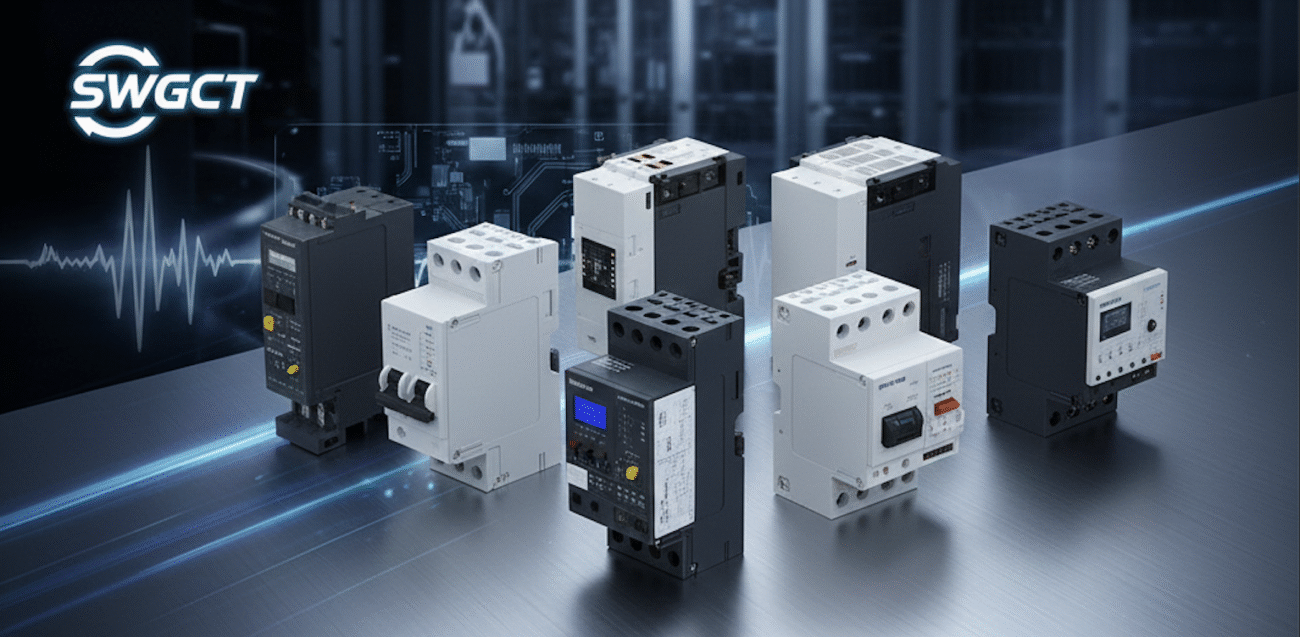
In an era where electrical safety is paramount—especially in densely populated homes, commercial buildings, and light industrial settings—the miniature leakage circuit breaker (MLCB) has become an indispensable device. Combining the functions of a standard miniature circuit breaker (MCB) with built-in residual current detection, MLCBs provide dual protection against overloads, short circuits, and earth leakage currents. Their compact size, affordability, and ease of installation make them the go-to choice for protecting people and equipment from electric shocks and fire hazards.
In this comprehensive, SEO-optimized article, we’ll explore what an MLCB is, how it works, its components, advantages, applications, comparison with other protective devices, selection criteria, installation best practices, maintenance tips, and future trends.
What Is a Miniature Leakage Circuit Breaker (MLCB)?
A miniature leakage circuit breaker (MLCB)—also known as a leakage current circuit breaker (LCB) or RCBO (Residual Current Operated Circuit-Breaker with Overcurrent Protection)—is a single-phase or three-phase protective device designed to:
- Interrupt normal circuit currents when they exceed safe limits (overload or short circuit).
- Detect and disconnect circuits when a residual current (leakage current) flows to earth, indicating a potential electric shock or insulation failure.
Unlike standalone residual current devices (RCDs) or earth leakage circuit breakers (ELCBs), MLCBs integrate both overcurrent protection and leakage detection into one compact unit, eliminating the need for separate MCB and RCD combinations.
MLCBs are typically rated for 6 A to 63 A at voltages up to 415 V AC, making them ideal for final circuit protection in residential, commercial, and light industrial applications.
How Does an MLCB Work?
The operation of an MLCB involves two independent protection mechanisms working in tandem:
1. Overcurrent Protection (MCB Function)
- Overload Protection: When current exceeds the rated value for an extended period (e.g., due to too many appliances), a bimetallic strip heats up and bends, triggering the tripping mechanism.
- Short-Circuit Protection: A sudden surge in current (e.g., from a short circuit) generates a strong electromagnetic force that instantly releases the latch, opening the contacts.
2. Residual Current Detection (RCD Function)
- A toroidal transformer (core balance CT) surrounds all live and neutral conductors. Under normal conditions, the current entering the load equals the current returning, so the net magnetic flux in the core is zero.
- If a leakage current occurs (e.g., through a person touching a live wire or damaged insulation), the currents become unbalanced. The resulting magnetic flux induces a small current in the secondary winding, which activates the tripping coil.
- The MLCB opens the circuit within milliseconds (typically 20–300 ms) to prevent electric shock or fire.
Key Components of an MLCB
| Component | Function |
|---|---|
| Frame & Housing | Durable plastic enclosure (UL 94 V-0 rated) for insulation and protection. |
| Contacts | Copper alloy or silver-plated contacts for low-resistance conduction. |
| Operating Mechanism | Spring-loaded lever system for fast contact separation. |
| Bimetallic Strip | Thermal element for overload protection. |
| Electromagnetic Coil | Instantaneous trip for short circuits. |
| Core Balance Transformer | Detects residual currents via magnetic flux imbalance. |
| Trip Coil | Receives signal from transformer to activate tripping mechanism. |
| Test Button | Simulates a leakage current to verify proper operation. |
| Reset Button | Recloses the contacts after tripping. |
| Terminals | Screw or push-in connections for line and load wires. |
Advantages of Miniature Leakage Circuit Breakers
1. Space-Saving Design
Combines two protective functions in one unit, reducing panel space and wiring complexity.
2. Comprehensive Protection
Protects against overloads, short circuits, and earth leakage—three major causes of electrical fires and injuries.
3. Fast Leakage Response
Trips in < 300 ms for residual currents ≥ 30 mA, significantly reducing the risk of fatal electric shock.
4. Easy Installation & Maintenance
Plug-and-play design simplifies retrofitting into existing consumer units or distribution boards.
5. Cost-Effective
Lower total cost compared to installing separate MCB + RCD combinations.
6. User-Friendly Testing
Built-in test button ensures regular verification of leakage protection functionality.
7. Versatile Applications
Suitable for lighting, socket outlets, water heaters, HVAC systems, and small machinery.
Limitations of MLCBs
- Limited Short-Circuit Capacity – Typically lower than dedicated MCBs; may require upstream protection for high-fault currents.
- Fixed Sensitivity – Most MLCBs have preset residual current thresholds (10 mA, 30 mA, 100 mA); adjustable versions are rare.
- Single-Pole Limitation – Primarily designed for single-phase circuits; three-phase MLCBs exist but are less common.
- Temperature Dependency – Bimetallic strip sensitivity varies with ambient temperature.
Comparison: MLCB vs. Other Protective Devices
| Feature | Miniature Leakage Circuit Breaker (MLCB) | Residual Current Device (RCD) | Earth Leakage Circuit Breaker (ELCB) | Standard MCB |
|---|---|---|---|---|
| Overcurrent Protection | ✅ Yes | ❌ No | ❌ No | ✅ Yes |
| Leakage Protection | ✅ Yes | ✅ Yes | ✅ Yes | ❌ No |
| Integration | Single-unit | Separate from MCB | Separate from MCB | Single-unit |
| Size | Compact | Requires extra space | Requires extra space | Compact |
| Response Time | Fast (< 300 ms) | Fast (< 300 ms) | Slow (> 500 ms) | Instant |
| Cost | Moderate | Lower than MLCB | Similar to RCD | Lowest |
| Common Use | Final circuit protection | Main distribution boards | Older installations | Branch circuits |
Applications of MLCBs
Residential Buildings
- Socket Outlets: Protects against shocks from faulty appliances or damaged cords.
- Lighting Circuits: Prevents fires caused by overheated wires or insulation breakdown.
- Water Heaters & Showers: Critical for wet environments where leakage risks are high.
- HVAC Systems: Guards against compressor faults or wiring damage.
Commercial Spaces
- Offices: Protects computers, printers, and office equipment.
- Retail Stores: Ensures safety in display areas and storage rooms.
- Restaurants & Cafes: Shields kitchen equipment and point-of-sale systems.
Light Industrial & Public Areas
- Workshops: Protects hand tools, soldering irons, and small machinery.
- Schools & Hospitals: Essential for child-safe and patient-critical environments.
- Hotels & Apartments: Provides tenant safety in individual rooms and shared facilities.
How to Choose the Right MLCB
- Rated Current (In) Select based on the load:
- Lighting: 6–16 A
- Socket outlets: 16–32 A
- Water heaters/HVAC: 25–40 A
- Residual Operating Current (IΔn)
- 10 mA: High-sensitivity applications (bathrooms, medical facilities)
- 30 mA: General residential/commercial use (IEC 61008 standard)
- 100 mA+: Fire protection in distribution boards
- Breaking Capacity (Icn) Choose ≥ 4.5 kA for most domestic installations; 6 kA or higher for commercial/light industrial.
- Poles
- 1P+N: Common for single-phase (line + neutral)
- 2P: For double-pole protection (e.g., 230 V circuits)
- 3P+N/4P: Three-phase applications
- Certifications Look for IEC 61009, CE, UL 1053, or local standards compliance.
- Additional Features
- Type A/B/C: Type A detects AC and pulsating DC; Type B adds smooth DC detection.
- Remote signaling: For smart home or BMS integration.
Installation Best Practices
- Correct Wiring: Connect line to the input terminal, load to the output terminal. Never reverse polarity.
- Toroid Placement: Ensure all live/neutral wires pass through the core balance transformer.
- Load Balancing: Avoid excessive loads that could cause nuisance tripping.
- Accessibility: Install in a location where the test/reset buttons are easily accessible.
- Labeling: Clearly mark protected circuits (e.g., “Kitchen Sockets”).
- Professional Installation: Hire a licensed electrician to ensure compliance with local codes.
Maintenance & Testing
- Monthly Test Button Press: Verifies leakage protection functionality.
- Annual Visual Inspection: Check for overheating signs, loose terminals, or physical damage.
- Cleanliness: Remove dust from the housing and toroid to prevent false trips.
- Calibration: Replace if tripping becomes erratic or delayed.
Future Trends in MLCB Technology
- Smart MLCBs: Integration with IoT platforms for remote monitoring, leakage alerts, and usage analytics.
- Adjustable Sensitivity: Models with variable IΔn settings for flexible applications.
- Energy Efficiency: Lower power consumption during standby mode.
- Enhanced DC Detection: Type B MLCBs becoming standard for EV chargers and solar systems.
- Compact Modular Designs: Smaller footprints for high-density consumer units.
Conclusion
The miniature leakage circuit breaker (MLCB) is more than just a protective device—it’s a compact lifesaver that integrates essential safety functions into a single, easy-to-install unit. Whether you’re upgrading a home’s electrical panel, designing a commercial building, or ensuring compliance with safety regulations, MLCBs offer unmatched protection against overloads, short circuits, and deadly earth leakage currents.
As technology advances, MLCBs will continue to evolve—becoming smarter, more adaptable, and even more integral to modern electrical safety systems. Investing in quality MLCBs today means safeguarding lives and property for years to come.