



Control and Protection Switchgear: The Backbone of Electrical Safety and Efficiency

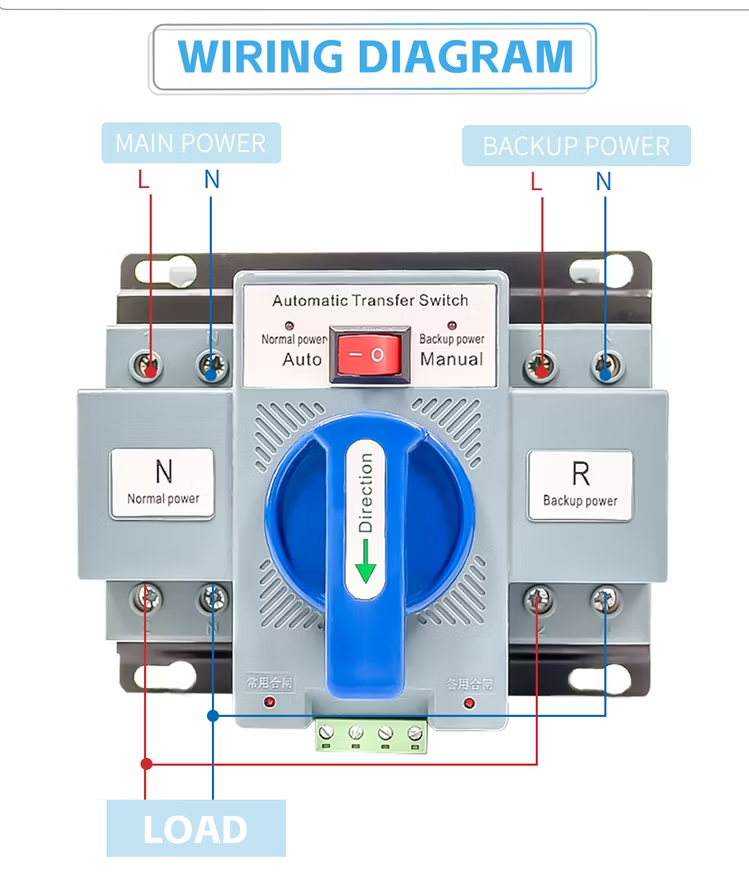
In the realm of electrical engineering, control and protection switchgear stands as a critical system designed to manage, control, and safeguard electrical power systems. Whether in a residential building, an industrial plant, or a utility substation, this equipment ensures the reliable distribution of electricity while protecting infrastructure and personnel from faults.
This article dives deep into what control and protection switchgear is, its core components, operational principles, benefits, and latest technological trends — all optimized for SEO to help you find exactly what you need.
What Is Control and Protection Switchgear?
Control and protection switchgear refers to a combination of electrical devices used to monitor, regulate, and protect electrical circuits and equipment. Its primary roles include:
- Control: Managing the flow of electricity through switching operations (turning circuits on/off).
- Protection: Detecting faults such as overloads, short circuits, or earth faults and isolating defective sections automatically to prevent damage.
Typically installed in substations, commercial buildings, factories, and renewable energy installations, switchgear acts as both a gatekeeper and guardian for electrical networks.
Core Components of Control and Protection Switchgear
Understanding its anatomy helps clarify how switchgear delivers functionality and safety:
1. Circuit Breakers
These devices interrupt current during abnormal conditions. They can be air-insulated, gas-insulated (SF₆), or vacuum-based depending on voltage levels.
2. Disconnectors (Isolators)
Used to create a visible break in the circuit for maintenance purposes. Unlike breakers, isolators cannot interrupt load currents.
3. Protective Relays
Sensors that detect irregularities in voltage, current, frequency, or phase imbalance and send trip signals to circuit breakers.
4. Busbars
Conductive bars that distribute electrical power within the enclosure. Made from copper or aluminum for excellent conductivity.
5. Instrument Transformers
Current transformers (CTs) and voltage transformers (VTs) scale down high voltages/currents to measurable levels for relays and meters.
6. Control Panels & SCADA Integration
Provide operators with manual controls and real-time monitoring. Advanced setups integrate with Supervisory Control and Data Acquisition (SCADA) systems for remote management.
How Control and Protection Switchgear Works
The operation follows a seamless sequence:
- Normal Operation: Under standard conditions, the switchgear allows continuous power flow through closed circuit breakers.
- Fault Detection: If a fault occurs — such as a short circuit or ground fault — protective relays sense the anomaly.
- Tripping Action: The relay sends a signal to the circuit breaker, which opens to isolate the faulty section.
- System Recovery: After repair, the breaker is closed, restoring power to healthy parts of the network.
This automated response happens in milliseconds, preventing catastrophic failures.
Key Benefits of Using Control and Protection Switchgear
1. Enhanced Safety
By quickly disconnecting faulty equipment, it minimizes the risk of fire, electric shock, and equipment damage.
2. Increased System Reliability
Prevents cascading failures across the grid, ensuring stable power supply.
3. Operational Flexibility
Allows for safe maintenance, load transfer, and system reconfiguration without total shutdowns.
4. Energy Loss Reduction
Efficient switching and protection reduce unnecessary power losses caused by prolonged faults.
5. Regulatory Compliance
Meets national and international standards (IEC, IEEE, NEC) for electrical safety and performance.
Applications Across Industries
Control and protection switchgear is indispensable in:
- Power Generation: Protects generators from overcurrents and synchronizes output.
- Transmission & Distribution: Manages high-voltage power flows across networks.
- Industrial Plants: Ensures uptime in manufacturing by preventing equipment damage.
- Commercial Buildings: Safeguards HVAC, lighting, and data center power systems.
- Renewable Energy: Integrates solar, wind, and battery storage safely into grids.
Latest Technological Trends
Switchgear technology continues evolving rapidly:
- Digital Relays: Offer higher precision and diagnostics compared to analog counterparts.
- IoT-enabled Monitoring: Sensors feed real-time data into cloud platforms for predictive maintenance.
- Eco-friendly Insulation: Replacement of SF₆ gas with alternatives like Clean Air or vacuum technology to reduce greenhouse emissions.
- Compact Modular Designs: Save space and installation time in urban substations and offshore platforms.
Choosing the Right Switchgear for Your Needs
Consider these factors before procurement:
- Voltage Rating: Match the switchgear rating to your system voltage.
- Current Capacity: Ensure adequate handling of peak loads.
- Fault Level: Assess prospective short-circuit current at the installation point.
- Environmental Conditions: Temperature, humidity, and corrosive atmospheres influence material choice.
- Future Expansion: Opt for scalable systems that accommodate growing demands.
Conclusion
Control and protection switchgear is far more than just metal enclosures and switches — it is the intelligent shield that guards our electrical infrastructure. By integrating advanced sensing, rapid interruption, and seamless control, it delivers safety, reliability, and efficiency across countless applications.
Investing in quality switchgear tailored to your operational needs is essential for uninterrupted power and long-term asset protection.


