



Types of Circuit Breakers: A Comprehensive Guide to Electrical Protection

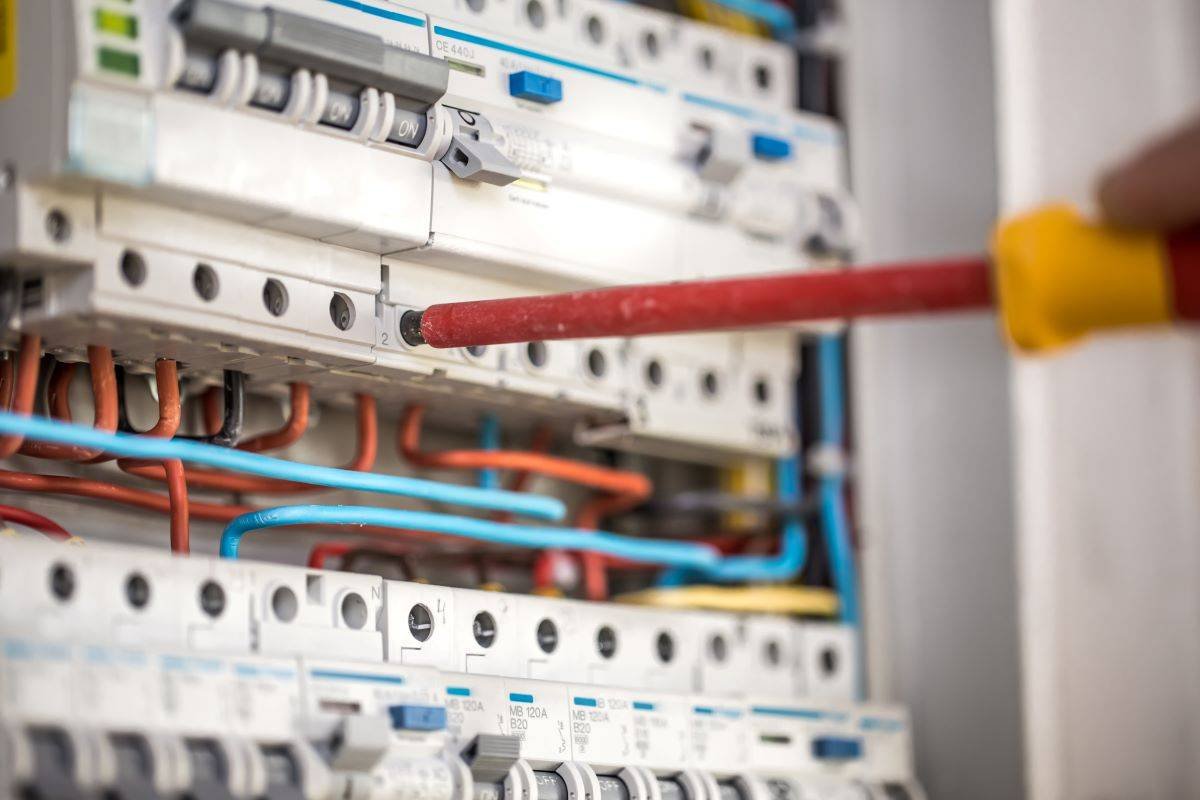
Electrical systems are the backbone of modern infrastructure, powering everything from household appliances to industrial machinery. However, with the convenience of electricity comes the risk of faults such as overloads, short circuits, and ground faults. To mitigate these dangers, circuit breakers serve as critical safety devices that automatically interrupt current flow when abnormalities are detected.
But not all circuit breakers are created equal. Depending on voltage levels, applications, and technologies, there are numerous types of circuit breakers, each engineered for specific roles in electrical protection. In this detailed, SEO-optimized article, we’ll explore every major category, how they work, their advantages, and where they’re used—helping you understand which type suits your needs.
What Is a Circuit Breaker?
Before diving into types, let’s briefly define the device:
A circuit breaker is an automatically operated electrical switch designed to protect an electrical circuit from damage caused by excess current due to overloads or short circuits. Unlike fuses, which must be replaced after activation, circuit breakers can be reset (manually or automatically) to resume normal operation.
Now, let’s examine the various types of circuit breakers based on different classification criteria.
1. Classification by Voltage Rating
A. Low-Voltage Circuit Breakers (LVCBs)
- Voltage Range: Below 1,000 volts AC (commonly 120V to 690V).
- Applications: Residential, commercial, and light industrial systems.
- Examples: Miniature Circuit Breakers (MCBs), Molded Case Circuit Breakers (MCCBs), Residual Current Circuit Breakers (RCCBs), and Ground Fault Circuit Interrupters (GFCIs).
- Key Features: Compact size, thermal-magnetic tripping, and user-friendly reset mechanisms.
B. Medium-Voltage Circuit Breakers (MVCBs)
- Voltage Range: 1 kV to 72.5 kV.
- Applications: Distribution networks, factories, and utility substations.
- Types: Air circuit breakers (ACBs), Vacuum circuit breakers (VCBs), and SF₆ gas circuit breakers.
- Key Features: Higher interrupting capacity, often housed in metal-enclosed switchgear.
C. High-Voltage Circuit Breakers (HVCBs)
- Voltage Range: Above 72.5 kV, up to 1,200 kV.
- Applications: Power generation plants, transmission lines, and grid interconnections.
- Types: SF₆ circuit breakers, Vacuum circuit breakers (for up to 145 kV), and Oil circuit breakers (legacy systems).
- Key Features: Extremely high interrupting capacity, often with advanced arc-quenching systems.
2. Classification by Construction and Technology
A. Miniature Circuit Breaker (MCB)
- Use: Protects low-current circuits in homes and offices.
- Rating: Up to 125A, 10kAIC.
- Operation: Thermal-magnetic tripping.
- Advantage: Compact, cost-effective, and easily replaceable.
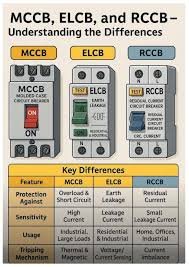
B. Molded Case Circuit Breaker (MCCB)
- Use: Industrial and commercial applications with higher current demands.
- Rating: 15A to 2,500A, up to 200kAIC.
- Operation: Adjustable thermal and magnetic trips, some with electronic modules.
- Advantage: Configurable for different load conditions.
C. Air Circuit Breaker (ACB)
- Use: Low- and medium-voltage industrial systems.
- Operation: Air as the arc-quenching medium.
- Advantage: Durable, low maintenance, and visible contacts for inspection.
D. Vacuum Circuit Breaker (VCB)
- Use: Medium-voltage systems (up to 145 kV).
- Operation: Arc extinguished in a vacuum interrupter.
- Advantage: Noiseless, no gas emissions, and long service life.
E. SF₆ Gas Circuit Breaker
- Use: High- and medium-voltage systems.
- Operation: Sulfur hexafluoride (SF₆) gas quenches the arc.
- Advantage: High dielectric strength, compact size, and excellent arc extinction.
- Note: Environmental concerns due to SF₆ being a potent greenhouse gas.
F. Oil Circuit Breaker (OCB)
- Use: Older high-voltage systems.
- Operation: Oil acts as both insulator and arc quencher.
- Disadvantage: Fire hazard, high maintenance, largely replaced by SF₆ and VCBs.
3. Classification by Protection Function
A. Standard Circuit Breakers
Protect against overloads and short circuits.
B. Ground Fault Circuit Interrupter (GFCI)
- Use: Wet areas (bathrooms, kitchens, outdoor outlets).
- Function: Detects current imbalance between hot and neutral wires (indicating leakage to ground).
- Tripping Current: As low as 4–6 mA.
C. Arc Fault Circuit Interrupter (AFCI)
- Use: Residential bedrooms and living areas.
- Function: Detects dangerous arcing conditions that can cause fires.
- Technology: Microprocessor-based analysis of waveform patterns.
D. Residual Current Circuit Breaker (RCCB)
- Use: Similar to GFCI but without overload protection—must pair with MCB/MCCB.
- Function: Measures residual current for leakage detection.
E. Combination AFCI/GFCI Breakers
Offer dual protection in one device—ideal for comprehensive residential safety.
4. Classification by Operation Mode
A. Manual Circuit Breakers
Require human intervention to reset after tripping. Common in homes and small businesses.
B. Automatic Circuit Breakers
Reset themselves after cooling down or based on programmable logic. Used in critical systems like data centers.
C. Remote-Operated Circuit Breakers
Controlled via SCADA systems or IoT interfaces—essential for smart grids and unmanned substations.
5. Specialized Types of Circuit Breakers
A. DC Circuit Breakers
Designed for direct current systems (solar farms, EVs, battery storage). More challenging to interrupt due to continuous arc tendency.
B. Smart Circuit Breakers
Integrate sensors, communication modules, and analytics for real-time monitoring, predictive maintenance, and energy management.
C. Solid-State Circuit Breakers
Use power semiconductors (IGBTs, MOSFETs) instead of mechanical contacts—offer nanosecond response times and zero maintenance.
Comparison Table: Common Circuit Breaker Types
| Type | Voltage Range | Typical Use | Arc Quenching Medium | Key Advantage |
|---|---|---|---|---|
| MCB | Up to 415V AC | Homes, offices | Air | Compact, inexpensive |
| MCCB | Up to 690V AC | Industrial, commercial | Air | Adjustable trips, high capacity |
| ACB | Up to 690V AC | Industrial switchgear | Air | Visible contacts, rugged |
| VCB | 1kV–145kV | Medium-voltage substations | Vacuum | Silent, eco-friendly |
| SF₆ CB | 72.5kV–800kV | Transmission grids | SF₆ gas | High efficiency, compact |
| GFCI | Up to 240V AC | Wet locations | Air | Prevents electric shock |
| AFCI | Up to 240V AC | Residential circuits | Air | Prevents arc-fault fires |
| Smart Breaker | Any | Modern buildings, grids | Varies | Remote monitoring, diagnostics |
How to Choose the Right Type of Circuit Breaker
- Determine Voltage Level – Match breaker rating to system voltage.
- Assess Load Current – Calculate maximum expected current plus safety margin.
- Identify Environmental Conditions – Consider moisture, dust, vibration, and temperature.
- Evaluate Protection Needs – Overload, short circuit, ground fault, arc fault, or all.
- Check Regulatory Compliance – Follow NEC, IEC, IEEE, or local codes.
- Plan for Future Expansion – Choose breakers with scalable interrupting capacity.
Maintenance Tips for All Circuit Breaker Types
- Visual Inspection: Look for burns, corrosion, or loose terminals.
- Functional Testing: Use a breaker analyzer to verify trip times and currents.
- Cleanliness: Keep interiors free of dust and conductive particles.
- Lubrication: For mechanical breakers, ensure moving parts move freely.
- Record Keeping: Log trip events, repairs, and replacements for trend analysis.
Future Trends in Circuit Breaker Technology
- Eco-Friendly Alternatives to SF₆: Clean air and vacuum technologies gaining traction.
- AI-Driven Diagnostics: Predict failures before they happen.
- Energy-Efficient Designs: Lower power losses during operation.
- Integration with Renewable Energy: Dedicated DC breakers for solar, wind, and storage systems.
- Cybersecurity for Smart Breakers: Protecting remote-operated devices from cyber threats.
Conclusion
Understanding the types of circuit breakers is essential for designing safe, reliable, and code-compliant electrical systems. From the humble MCB in your home panel to the sophisticated SF₆ breaker in a high-voltage substation, each type serves a unique purpose in protecting people, equipment, and infrastructure from electrical faults.
By selecting the right breaker for your application—considering voltage, current, environment, and protection needs—you ensure optimal performance and safety. As technology evolves, circuit breakers will become smarter, greener, and more integrated into our digital world.


