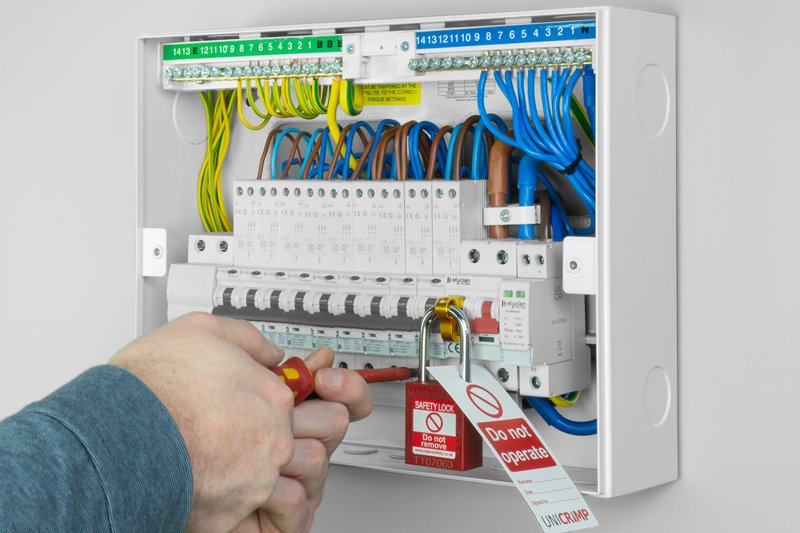



Residual Current Circuit Breaker (RCCB): The Silent Guardian of Electrical Safety


In modern electrical systems, protecting human life from electric shock and preventing electrical fires are paramount. While fuses and miniature circuit breakers (MCBs) protect equipment from overcurrent, they are dangerously inadequate against earth leakage currents. This critical gap is filled by the Residual Current Circuit Breaker (RCCB), often referred to as a Residual Current Device (RCD) or Ground Fault Circuit Interrupter (GFCI).
This comprehensive, SEO-optimized guide will explore what an RCCB is, how it works, its types, key components, applications, selection criteria, and future trends.
What Is a Residual Current Circuit Breaker (RCCB)?
A Residual Current Circuit Breaker (RCCB) is a safety device designed to disconnect a circuit whenever it detects that the electric current is not balanced between the live (phase) and neutral conductors. This imbalance, known as residual current, indicates that some of the current is leaking to earth—potentially through a person’s body or faulty appliance insulation.
Unlike a standard MCB, which only trips on overcurrent or short circuits, the RCCB is specifically engineered to detect tiny leakage currents (as low as 5–30 mA) and trip within milliseconds, preventing fatal electric shocks and reducing the risk of electrical fires.
How Does an RCCB Work? The Science of Safety
The operation of an RCCB is based on the principle of Kirchhoff’s Current Law, which states that the current entering a circuit must equal the current leaving it.
Here is the step-by-step process:
- Continuous Monitoring: The RCCB constantly monitors the current flowing through the live and neutral wires using a core balance transformer (a toroidal transformer).
- Normal Condition: Under normal circumstances, the current flowing in the live wire is exactly equal to the current returning via the neutral wire. These opposing currents produce cancelling magnetic fluxes in the transformer core, resulting in zero net magnetic flux.
- Fault Condition (Leakage): If a person touches a live part or a cable insulation fails, some current leaks to earth. The current returning through the neutral wire is now lessthan the current entering via the live wire.
- Imbalance Detection: This difference in current (the residual current) creates a net magnetic flux in the transformer core.
- Signal Amplification: The net flux induces a small voltage in the secondary winding of the transformer, which is amplified by an electronic circuit.
- Tripping Action: The amplified signal energizes a trip coil, which mechanically unlatches the contacts, disconnecting the circuit almost instantly (within 20–300 milliseconds).
Key Components of an RCCB
| Component | Function |
|---|---|
| Core Balance Transformer (CT) | The heart of the RCCB; detects the difference between live and neutral currents. |
| Electronic Amplifier | Amplifies the weak signal from the CT to a level capable of triggering the trip coil. |
| Trip Coil (Solenoid) | An electromagnet that, when energized, releases the mechanical latch holding the contacts closed. |
| Main Contacts | Silver-alloy contacts that open to break the circuit. |
| Test Button | Creates a small, controlled leakage current to simulate a fault and verify the RCCB is functioning correctly. |
| Reset Button/Lever | Manually closes the contacts after a trip. |
| Arc Chutes | Chambers that cool and extinguish the electric arc formed when contacts open. |
| Housing | Flame-retardant, insulating thermoplastic enclosure. |
Types of Residual Current Circuit Breakers
RCCBs are classified based on their construction and the type of current they detect.
1. Two-Pole RCCB (Type AC)
- Description: The most common type, with one pole for the live wire and one for the neutral.
- Detection: Detects alternating current (AC) residual currents.
- Use Case: Standard residential and commercial applications.
2. Four-Pole RCCB
- Description: Includes poles for all three phases and the neutral.
- Use Case: Three-phase industrial systems to protect against earth faults in any phase.
3. Type A RCCB
- Detection: Detects AC residual currents andpulsating direct currents (DC).
- Use Case: Circuits with single-phase rectifier loads, such as variable speed drives or some washing machine motors.
4. Type B RCCB
- Detection: Detects AC, pulsating DC, andsmooth DC residual currents up to 1000 Hz.
- Use Case: Modern applications with complex electronics, such as EV chargers, solar inverters, and medical equipment.
5. Type F RCCB
- Detection: Detects AC, pulsating DC, and high-frequency residual currents (up to 1 kHz).
- Use Case: Frequency converters and certain types of dimmer switches.
6. RCCB with Overcurrent Protection (RCBO)
- Description: A combination device that provides both earth leakage protection (RCCB function) and overcurrent/short-circuit protection (MCB function) in a single unit.
- Use Case: Final sub-circuits in modern consumer units, saving space.
Advantages of Using RCCBs
- Life-Saving Protection: Trips at currents as low as 30 mA, preventing ventricular fibrillation and death from electric shock.
- Fire Prevention: Detects small leakage currents (e.g., 300 mA) that could cause overheating and ignite fires in hidden wiring.
- Equipment Protection: Sensitive electronics are safeguarded against damage from insulation breakdown.
- Selective Tripping: Protects only the faulty circuit, leaving other circuits operational.
- Mandatory Compliance: Required by electrical wiring regulations (e.g., IEC 60364, NEC) in most countries for new installations.
Limitations of RCCBs
- Nuisance Tripping: Can trip due to transient surges, lightning strikes, or highly capacitive loads.
- No Overcurrent Protection: A standalone RCCB mustbe used in conjunction with an MCB or fuse.
- Dependence on Neutral: Requires a continuous neutral connection to function; a broken neutral can prevent tripping.
- Sensitivity to Environment: Very old or damaged units may become less sensitive over time.
Applications of Residual Current Circuit Breakers
- Residential Buildings: Protecting socket outlets, bathrooms, kitchens, and outdoor circuits.
- Commercial Premises: Offices, shopping malls, hotels, and restaurants.
- Healthcare Facilities: Critical for patient areas to prevent micro-shocks.
- Industrial Plants: Protecting personnel working with machinery and portable tools.
- Construction Sites: Temporary power supplies where equipment is exposed to weather and damage.
- Renewable Energy: Essential for solar PV systems and EV charging stations (using Type B RCCBs).
How to Choose the Right RCCB
- Number of Poles:
- 1-Phase: Choose a 2-pole RCCB.
- 3-Phase: Choose a 4-pole RCCB.
- Rated Residual Operating Current (IΔn)
- 30 mA: For personal protection against electric shock (standard for sockets).
- 100–300 mA: For fire protection on distribution boards.
- 10 mA: For extra-sensitive areas like swimming pools or medical bays.
- Type of RCCB
- Type AC: Basic applications (older standard).
- Type A: For modern homes with electronic appliances.
- Type B: Mandatory for EV chargers and solar inverters.
- Rated Current (In)
- Must be higher than the normal operating current of the circuit (e.g., 16 A, 25 A, 40 A, 63 A).
- Short-Circuit Capacity (Icn)
- Should match or exceed the prospective short-circuit current at the installation point (typically 4.5 kA or 6 kA for domestic use).
- Time Delay (S-Type)
- For selective coordination in multi-stage distribution systems, an S-type (time-delayed) RCCB prevents upstream tripping.
Maintenance and Testing
- Monthly Push-Test: Always press the “T” or test button monthly to ensure the internal mechanism and electronics are functional.
- Professional Inspection: Have a qualified electrician perform a trip time test and insulation resistance check annually.
- Avoid DIY Repairs: Never attempt to repair an RCCB yourself; replace the entire unit if faulty.
Future Trends in RCCB Technology
- Smart RCCBs: Integration with IoT platforms, allowing remote monitoring, trip alerts, and energy consumption data via smartphone apps.
- Arc Fault Detection (AFDD): Combination devices that detect both residual current anddangerous arcing faults.
- Self-Testing RCCBs: Units that perform automatic internal self-tests and alert users via an LED if a fault is detected.
- Miniaturization: Smaller form factors for high-density consumer units.
- Enhanced DC Detection: More robust Type B RCCBs to handle the growing complexity of DC-coupled solar and battery systems.
Conclusion
The Residual Current Circuit Breaker (RCCB) is arguably the most important safety device in any modern electrical installation. By acting as a vigilant guardian against lethal electric shocks and devastating fires, it provides a level of protection that standard overcurrent devices simply cannot match.
Understanding the differences between Type AC, A, and B, and selecting the correct rated current and sensitivity, is crucial for ensuring a safe and code-compliant electrical system. As technology advances, the RCCB will evolve from a simple safety switch into an intelligent, connected node in the smart homes and grids of the future.