



Power Distribution Equipment Supplier: How to Choose the Right Partner

Choosing the right power distribution equipment supplier is an important decision for industrial facilities, commercial buildings, infrastructure projects, electrical contractors, distributors, and system integrators.
Power distribution equipment helps move electrical power from the main source to different loads while providing control, protection, switching, and monitoring functions. Depending on the application, a distribution system may include circuit breakers, switchgear, automatic transfer switches, surge protection devices, isolators, busbars, power capacitors, and other components.
For international buyers, selecting a supplier involves more than comparing prices. Product specifications, manufacturing capability, quality control, certifications, customization, technical support, and delivery capacity should all be considered.
This guide explains the main types of power distribution equipment and how to select a suitable supplier for your electrical project.
What Is Power Distribution Equipment?
Power distribution equipment consists of electrical products and assemblies used to distribute electricity from a power source to downstream circuits and electrical loads.
A typical system may include:
- Switchgear
- Circuit breakers
- Distribution boards
- Automatic transfer switches
- Isolator switches
- Busbars
- Surge protection devices
- Power capacitors
- Metering and monitoring equipment
The exact configuration depends on the voltage level, load characteristics, system architecture, installation environment, and applicable standards.
A professional power distribution equipment supplier should be able to provide products that work together as part of a coordinated electrical system.
For related products, explore the SWGCT electrical product range.
Why Is the Right Power Distribution Equipment Supplier Important?
Power distribution equipment is a critical part of an electrical installation.
The wrong equipment can create problems involving compatibility, maintenance, reliability, installation, or protection.
A qualified supplier should be able to provide:
- Appropriate product specifications
- Technical documentation
- Product testing information
- Applicable certifications
- Engineering support
- Customization options
- Consistent product quality
- Reliable supply
For large projects, supplier capability can affect the entire procurement process, from initial design to installation and future replacement.
Main Types of Power Distribution Equipment
Circuit Breakers
Circuit breakers protect electrical circuits against abnormal current conditions and provide switching functions.
Common types include:
- MCB
- MCCB
- ACB
- DC circuit breakers
Selection depends on parameters such as rated current, voltage, breaking capacity, pole configuration, and application.
For circuit protection applications, see the SWGCT circuit breaker products.
Low Voltage Switchgear
Low voltage switchgear combines switching, protection, isolation, and distribution functions within an electrical assembly.
It can include:
- Circuit breakers
- Busbars
- Switches
- Protection devices
- Metering equipment
- Control components
Low voltage switchgear is widely used in industrial plants, commercial buildings, infrastructure, and other electrical distribution systems.
Automatic Transfer Switches
An Automatic Transfer Switch, or ATS, transfers electrical loads between available power sources according to its control logic.
A common application is:
Utility power → Generator backup
When the primary source becomes unavailable, the ATS can transfer the load to an alternative source according to the system design.
ATS systems are commonly considered for:
- Data centers
- Hospitals
- Factories
- Commercial buildings
- Telecommunications
- Critical infrastructure
For backup power applications, explore automatic transfer switch solutions from SWGCT.
Surge Protection Devices
Surge Protection Devices, or SPDs, are used to limit transient overvoltage and help protect connected electrical equipment.
They can be installed in:
- Main distribution systems
- Sub-distribution boards
- Industrial control systems
- Commercial buildings
- Solar installations
SPDs provide a different protection function from circuit breakers, so the two devices should not be considered interchangeable.
Isolator Switches
An isolator switch provides a means of disconnecting an electrical circuit or equipment from its power source.
They are useful for:
- Maintenance
- Equipment servicing
- Electrical isolation
- Industrial installations
For more information, see the electrical isolator switch guide.
Power Capacitors
Power capacitors are commonly used for applications such as power factor correction.
They can be incorporated into electrical systems serving:
- Factories
- Commercial buildings
- Industrial equipment
- Power distribution systems
SWGCT provides information about power factor correction products and capacitor applications. Read the automatic power factor capacitor guide for additional information.
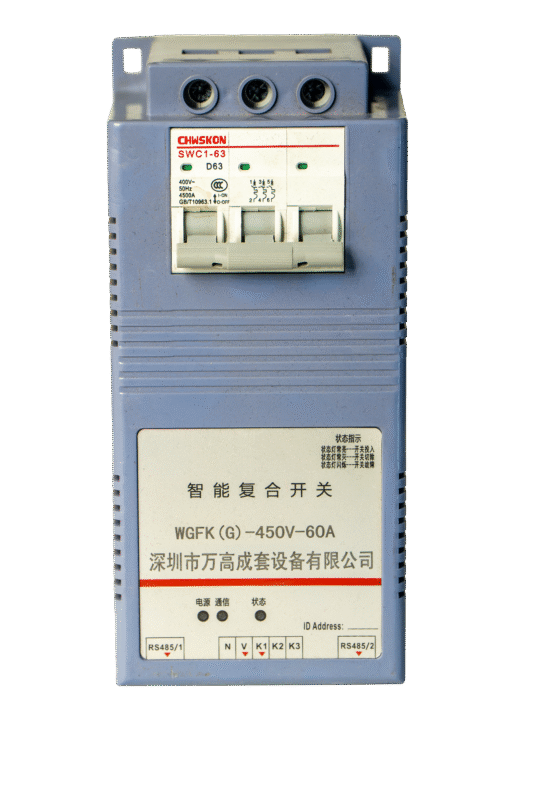
Applications of Power Distribution Equipment
Power distribution equipment is used across a wide range of industries.
Industrial Facilities
Factories often have complex electrical distribution networks supporting:
- Motors
- Production machinery
- Automation
- HVAC
- Lighting
- Control systems
Industrial systems may require multiple layers of protection and switching.
A supplier with experience in industrial applications can help buyers evaluate equipment based on electrical loads, fault levels, operating conditions, and maintenance requirements.
Commercial Buildings
Commercial facilities such as offices, hotels, shopping centers, and public buildings require electrical distribution for:
- Lighting
- HVAC
- Elevators
- Pumps
- Security systems
- Emergency systems
Distribution equipment must be selected according to the building’s electrical design and applicable local requirements.
Data Centers
Data centers require carefully designed power distribution because critical IT equipment depends on electrical availability.
Equipment may include:
- Switchgear
- Circuit breakers
- ATS systems
- UPS-related distribution equipment
- Surge protection
- Monitoring equipment
The distribution architecture should be designed around the facility’s redundancy, load, and continuity requirements.
Healthcare Facilities
Hospitals and other healthcare facilities can have critical electrical loads, including medical equipment, emergency systems, lighting, and HVAC.
Power distribution equipment may form part of a larger backup power architecture that includes generators and transfer equipment.
Renewable Energy Projects
Solar and energy storage projects require electrical distribution and protection on both AC and, where applicable, DC sides.
Potential equipment includes:
- DC circuit breakers
- AC circuit breakers
- SPDs
- Isolators
- Distribution equipment
- Monitoring equipment
The selected products should be appropriately rated for the specific system.
How to Choose a Power Distribution Equipment Supplier
Choosing a supplier should involve a structured evaluation.
1. Check the Product Portfolio
Start by identifying all the products you need.
For example:
- Circuit breakers
- Switchgear
- ATS
- SPDs
- Isolators
- Capacitors
A supplier with complementary product categories can potentially simplify procurement.
2. Evaluate Manufacturing Capability
If you are buying directly from a manufacturer, evaluate its production capabilities.
Important factors include:
- Manufacturing facilities
- Assembly equipment
- Testing equipment
- Engineering resources
- Production capacity
- Quality-control procedures
If the supplier is a trading company, determine which factories actually manufacture the products.
3. Review Technical Support
Electrical distribution equipment involves technical specifications that must match the application.
A capable supplier should be able to provide:
- Datasheets
- Technical drawings
- Wiring diagrams
- Installation instructions
- Product catalogs
- Test documentation
Technical support is especially important for customized or large-scale projects.
Important Specifications to Compare
When comparing suppliers, consider the following specifications.
| Specification | Why It Matters |
|---|---|
| Rated voltage | Must match the electrical system |
| Rated current | Determines current-carrying capability |
| Frequency | Must match the power system |
| Breaking capacity | Important for protection equipment |
| Number of poles | Determines circuit configuration |
| IP rating | Important for environmental protection |
| Short-circuit rating | Important for distribution equipment |
| Operating temperature | Affects installation suitability |
| Transfer time | Important for ATS applications |
| Communication functions | Useful for monitoring and automation |
| Applicable standards | Required for many projects |
The exact parameters depend on the type of equipment being purchased.
Why Quality Control Matters
Power distribution equipment must operate reliably under its specified conditions.
A professional supplier should have quality-control processes covering multiple stages.
Incoming Material Inspection
Components and materials should be checked before production.
Assembly Inspection
Products should be assembled according to defined specifications and manufacturing procedures.
Electrical Testing
Appropriate electrical tests should be performed based on the product type and applicable requirements.
Final Inspection
Finished products should be checked before packaging and shipment.
For large-volume buyers, consistency between batches is especially important.
Certifications and Standards
Standards and certification requirements vary according to the product and destination market.
The International Electrotechnical Commission (IEC) develops international standards for electrical and electronic technologies.
For North American markets, buyers can also consult UL Solutions for applicable safety standards and certification information.
When reviewing certificates, make sure the documentation applies to the specific product model being purchased. A general company certificate does not necessarily demonstrate compliance of every product.
OEM Power Distribution Equipment
OEM capability can be important for electrical distributors and private-label brands.
Depending on the manufacturer, OEM services may include:
- Private labeling
- Customized packaging
- Product branding
- Product configuration
- Selected technical modifications
Before beginning an OEM project, confirm:
- Minimum order quantity
- Production lead time
- Available customization
- Branding requirements
- Packaging specifications
- Testing requirements
A detailed technical specification should be agreed upon before mass production.
Power Distribution Equipment Supplier vs Manufacturer
Buyers may encounter both manufacturers and distributors when sourcing electrical equipment.
Manufacturer
A manufacturer generally controls the production process and may provide:
- Factory-direct technical support
- OEM services
- Customization
- Production information
- Direct engineering communication
Distributor
A distributor may provide:
- Local stock
- Multiple brands
- Smaller order quantities
- Local technical support
- Faster delivery in some markets
The right sourcing model depends on your project requirements.
For large-volume or OEM purchasing, direct communication with a manufacturer may be useful. For small quantities or urgent local orders, a distributor may be more convenient.
Questions to Ask a Power Distribution Equipment Supplier
Before placing an order, ask the supplier:
Product Questions
- What products do you manufacture or supply?
- What specifications are available?
- Are customized configurations possible?
- Which applications are supported?
Quality Questions
- What quality-control procedures do you use?
- What testing is performed?
- Can you provide test reports?
Certification Questions
- Which standards apply to the product?
- What certifications are available?
- Does the certification cover the exact model?
Manufacturing Questions
- Where is the equipment manufactured?
- What is the production capacity?
- Can you support repeat orders?
Commercial Questions
- What is the MOQ?
- What is the lead time?
- Do you offer OEM services?
- What packaging options are available?
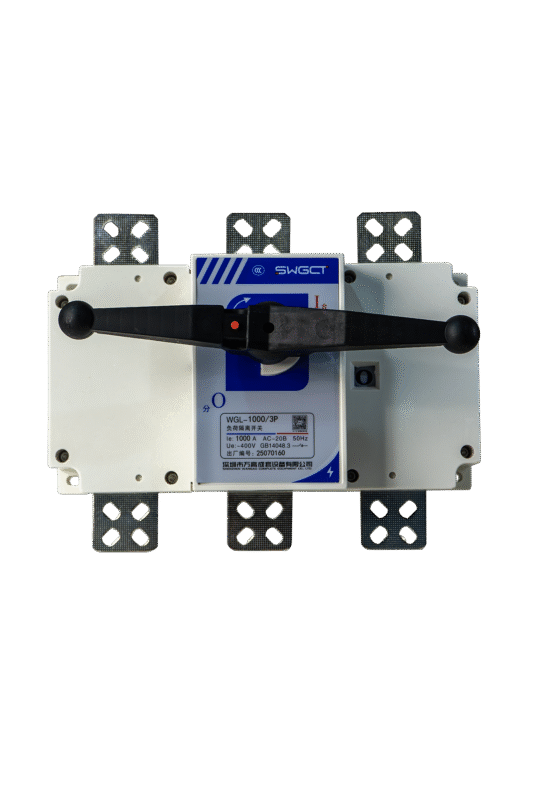
Common Mistakes When Buying Power Distribution Equipment
Choosing Only by Price
The cheapest quotation is not necessarily the best option.
Consider the total value, including:
- Product quality
- Testing
- Certification
- Technical support
- Warranty
- Delivery
- Replacement availability
Ignoring Electrical Specifications
Every product should be matched to the actual electrical system.
Important parameters can include:
- Voltage
- Current
- Frequency
- Fault level
- Breaking capacity
- Environmental conditions
Not Checking Compatibility
Components within a distribution system need to work together correctly.
For example, circuit breakers, busbars, transfer switches, and protective devices should be selected as part of the overall system design.
Not Requesting Technical Documents
Without proper datasheets and drawings, it can be difficult for engineers to confirm whether a product is appropriate.
Request documentation before finalizing the purchase.
Benefits of Working With an Experienced Supplier
Technical Expertise
An experienced supplier may provide useful technical guidance during product selection.
Consistent Quality
Established manufacturing and quality processes can support consistent products across orders.
Customization
OEM capabilities can help distributors create branded product lines.
Supply Stability
Production capacity and supply-chain management can be important for long-term procurement.
Integrated Procurement
A supplier with several complementary product categories may reduce the number of vendors required for an electrical project.
Frequently Asked Questions
What is a power distribution equipment supplier?
A power distribution equipment supplier provides products used to distribute, switch, control, protect, and monitor electrical power. Products may include circuit breakers, switchgear, ATS systems, SPDs, isolators, and power capacitors.
How do I choose a reliable power distribution equipment supplier?
Evaluate product quality, manufacturing capability, testing, certifications, technical support, customization, production capacity, delivery capability, and after-sales service.
What equipment is used in power distribution systems?
Common equipment includes switchgear, circuit breakers, distribution boards, busbars, automatic transfer switches, isolators, surge protection devices, metering equipment, and power capacitors.
Can I buy power distribution equipment directly from a manufacturer?
Yes. Many manufacturers sell directly to distributors, contractors, OEM buyers, and system integrators. Direct sourcing may be particularly useful for larger orders and customized products.
What standards apply to power distribution equipment?
The applicable standards depend on the product and market. IEC standards are widely used internationally, while individual countries and regions may have additional requirements.
Can power distribution equipment be customized?
Depending on the manufacturer, customization may include product configuration, cabinet design, branding, packaging, and selected technical specifications.
Why is breaking capacity important?
Breaking capacity is important for circuit protection equipment because the device must be suitable for the prospective fault current it may need to interrupt.
What industries use power distribution equipment?
Power distribution equipment is used in factories, commercial buildings, data centers, hospitals, infrastructure, renewable energy facilities, telecommunications, and many other electrical installations.
Conclusion
Choosing a reliable power distribution equipment supplier is an important step in building a safe, reliable, and maintainable electrical system.
Buyers should evaluate suppliers based on more than price. Manufacturing capability, product quality, technical documentation, testing, certifications, customization, production capacity, and technical support are all important considerations.
The right supplier should also understand how different components work together. Circuit breakers, switchgear, ATS systems, SPDs, isolators, and power capacitors can all play different roles within a broader electrical distribution and protection system.
For global buyers looking for electrical distribution and protection products, SWGCT provides solutions covering automatic transfer switches, circuit protection, and power quality applications.
Explore the SWGCT electrical product range to learn more about available electrical equipment and related solutions.


