



Electrical Equipment Manufacturer China: Complete Guide for Global Buyers

Choosing the right electrical equipment manufacturer in China is an important decision for distributors, electrical contractors, system integrators, OEM buyers, and industrial companies.
Electrical equipment plays a critical role in power distribution, electrical protection, backup power, energy management, and industrial automation. A reliable manufacturer should offer more than competitive pricing. Product quality, technical support, manufacturing capability, customization, certifications, and supply stability are all important factors to consider.
China has a large electrical manufacturing industry that supplies products to residential, commercial, industrial, renewable energy, and infrastructure projects around the world.
For buyers searching for an electrical equipment manufacturer in China, this guide explains the main product categories, applications, supplier selection factors, and questions to consider before starting a partnership.
What Is an Electrical Equipment Manufacturer?
An electrical equipment manufacturer designs, produces, tests, and supplies electrical products used in power systems and electrical installations.
Depending on the manufacturer, products may include:
- Circuit breakers
- Automatic transfer switches
- Manual transfer switches
- Surge protection devices
- Power capacitors
- Switchgear
- Electrical protection devices
- Power distribution equipment
- Industrial electrical components
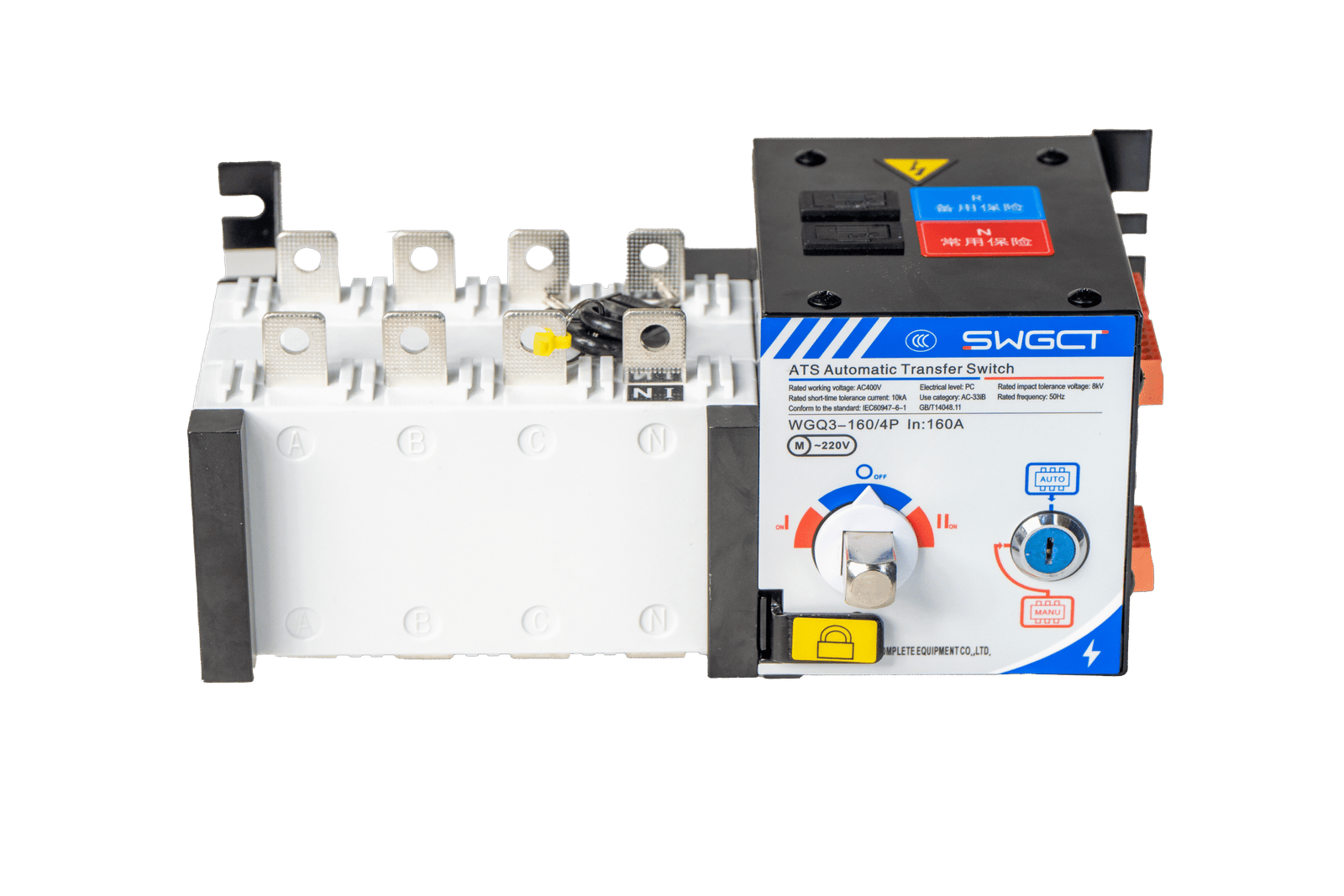
For example, SWGCT currently presents itself as an automatic transfer switch manufacturer and supplies automatic transfer switches, circuit breakers, and power capacitors for industrial backup power applications.
A manufacturer with multiple product categories can potentially provide more integrated solutions instead of requiring buyers to source every component from a different supplier.
Why Choose an Electrical Equipment Manufacturer in China?
China is an important sourcing market for electrical equipment because of its established manufacturing infrastructure and extensive component supply chain.
However, buyers should evaluate each supplier individually rather than assuming that every manufacturer offers the same level of quality or technical capability.
Competitive Manufacturing Costs
Chinese manufacturing can offer competitive production costs because of established supply chains for:
- Electrical components
- Copper and conductive materials
- Plastic and insulation materials
- Electronic components
- Mechanical components
- Packaging
For distributors and OEM buyers, direct cooperation with a manufacturer may also simplify procurement.
Broad Product Selection
A professional electrical equipment manufacturer may offer multiple product categories for different electrical applications.
These can include:
- Low-voltage circuit protection
- Backup power switching
- Surge protection
- Power factor correction
- Electrical distribution
This makes it easier for buyers to build a broader product portfolio.
OEM and Custom Solutions
Some manufacturers support customized products for distributors and system integrators.
Customization may involve:
- Product labeling
- Packaging
- Product configuration
- Electrical specifications
- Installation requirements
SWGCT states on its website that it supports customized OEM ATS products for worldwide buyers.
Main Types of Electrical Equipment
The electrical equipment market covers many different product categories. Understanding these categories can help buyers identify the right supplier.
Circuit Breakers
Circuit breakers protect electrical circuits from abnormal current conditions.
Common types include:
- MCB
- MCCB
- ACB
- DC circuit breakers
They are widely used in residential, commercial, industrial, and renewable energy systems.
If you are specifically sourcing circuit breakers, you can explore the circuit protection products available from SWGCT.
Automatic Transfer Switches
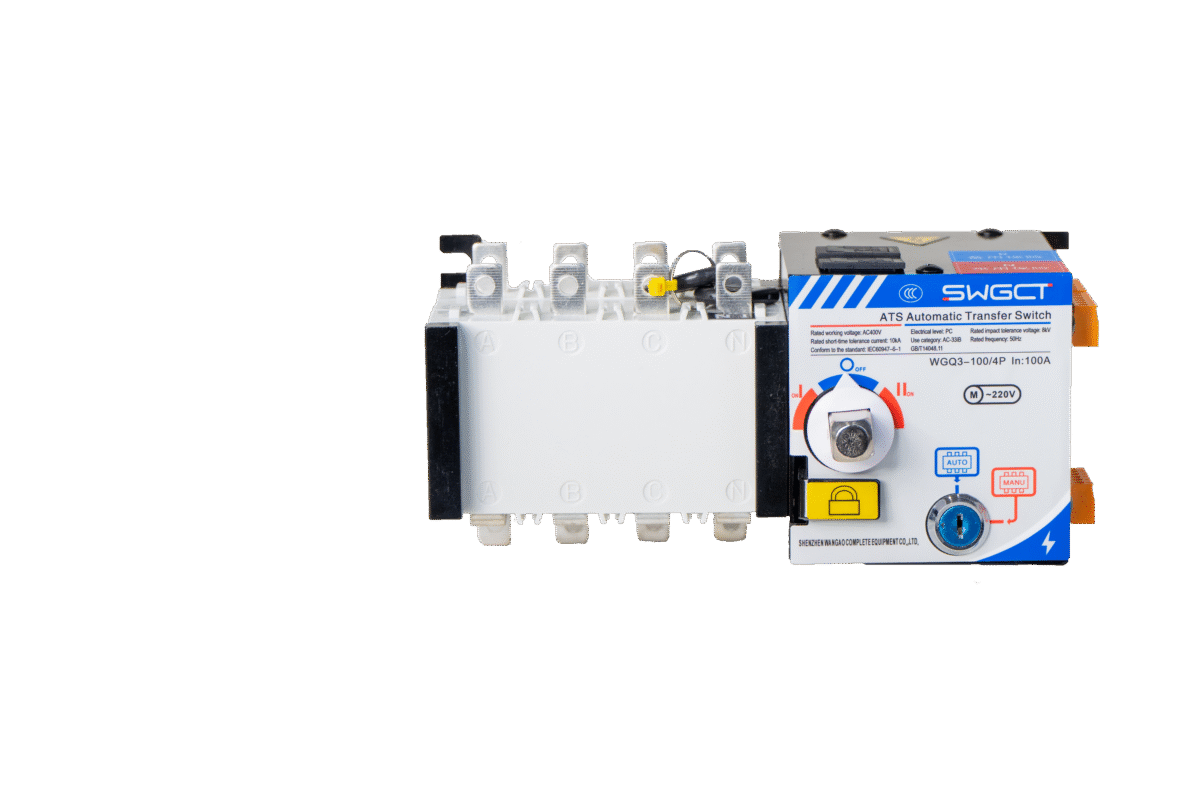
An Automatic Transfer Switch, or ATS, automatically transfers electrical loads between two power sources.
Typical applications include:
- Generator backup systems
- Data centers
- Hospitals
- Industrial facilities
- Commercial buildings
SWGCT identifies ATS systems as one of its core product areas and describes applications including critical infrastructure, healthcare, industrial systems, and commercial buildings.
For buyers looking for specific ATS products, see the automatic transfer switch solutions from SWGCT.
Surge Protection Devices
Surge Protection Devices protect electrical equipment from transient overvoltage events.
SPDs are commonly used in:
- Power distribution systems
- Industrial control systems
- Solar installations
- Commercial buildings
- Communication systems
For additional information, see the surge protection solutions available from SWGCT.
Power Capacitors
Power capacitors are used in electrical systems for power factor correction and power quality management.
Industrial and commercial facilities may use capacitor systems to manage reactive power and improve electrical system efficiency.
SWGCT currently publishes information about low-voltage power capacitors, harmonic filter capacitors, and automatic power factor correction capacitor systems.
You can also read the automatic power factor capacitor guide for more information about power factor correction.
Applications of Electrical Equipment
Electrical equipment manufacturers supply products for many industries.
Industrial Facilities
Factories require reliable electrical equipment to support:
- Production machinery
- Motor systems
- Automation
- Control panels
- Power distribution
Electrical protection equipment can help protect industrial systems from overloads, short circuits, surges, and other electrical problems.
For maintenance and isolation applications, an electrical isolator switch can provide a dedicated means of electrical isolation before maintenance work.
Commercial Buildings
Commercial buildings depend on electrical equipment for:
- Lighting
- HVAC
- Elevators
- Security systems
- Emergency power
- Building automation
Office buildings, hotels, shopping centers, and public facilities may require several different electrical products working together.
Data Centers
Data centers require highly reliable power infrastructure.
Electrical equipment may include:
- ATS systems
- Circuit breakers
- Surge protection
- UPS systems
- Distribution equipment
The goal is to reduce the impact of power interruptions and electrical faults on critical IT infrastructure.
Healthcare Facilities
Hospitals and healthcare facilities require reliable electrical systems for:
- Medical equipment
- Emergency systems
- Lighting
- HVAC
- Critical power loads
Automatic transfer systems are commonly used in backup power architectures where continuity of supply is important.
Renewable Energy
Solar and battery systems have created additional demand for specialized electrical equipment.
Applications can include:
- DC circuit protection
- DC surge protection
- AC protection
- Isolation switches
- Energy storage protection
A manufacturer with experience in both AC and DC applications may be better positioned to support renewable energy projects.
How to Choose an Electrical Equipment Manufacturer in China
Choosing a manufacturer should involve more than comparing quotations.
1. Check the Product Range
First, determine whether the manufacturer produces the products you actually need.
For example, if you need:
- ATS
- Circuit breakers
- Surge protection
- Capacitors
a supplier offering several of these categories may simplify procurement.
2. Evaluate Manufacturing Capability
Ask about:
- Production facilities
- Assembly processes
- Testing equipment
- Quality control
- Production capacity
A manufacturer should be able to explain how products are inspected before shipment.
3. Check Product Standards
Electrical equipment must comply with applicable standards for its target market.
Depending on the product and market, buyers may need to consider IEC, UL, CE, or other applicable requirements.
The International Electrotechnical Commission (IEC) publishes international standards covering many electrical and electronic technologies.
For North American markets, buyers can also review requirements and certification information from UL Solutions.
4. Request Technical Documentation
Before purchasing, request appropriate documentation such as:
- Datasheets
- Technical specifications
- Installation instructions
- Test reports
- Certificates
- Product drawings
Clear documentation makes it easier for engineers and installers to verify compatibility.
5. Evaluate OEM Capability
If you are a distributor or electrical brand, ask whether the manufacturer supports:
- Private labeling
- Customized packaging
- Product branding
- OEM production
- Technical customization
This can be particularly important for companies developing their own electrical equipment portfolio.
What Should You Ask an Electrical Equipment Manufacturer?
Before placing an order, buyers can ask the manufacturer:
Product Questions
- What products do you manufacture?
- What are the available specifications?
- What applications are the products designed for?
- What standards do they comply with?
Manufacturing Questions
- Where are the products manufactured?
- What is the production capacity?
- What quality control procedures are used?
- What testing is performed before shipment?
Commercial Questions
- What is the minimum order quantity?
- What is the production lead time?
- Do you support OEM orders?
- What are the available packaging options?
Technical Questions
- Can you provide datasheets?
- Can you provide wiring diagrams?
- Can you provide installation instructions?
- Can you recommend products based on our electrical system?
Why Product Quality Matters
Electrical equipment is directly connected to system safety and reliability.
Poor-quality components may result in:
- Unexpected equipment failure
- Electrical downtime
- Maintenance costs
- Installation problems
- Safety risks
This is why buyers should evaluate the manufacturer’s quality management process rather than choosing a supplier based solely on price.
For example, SWGCT’s website highlights product accuracy, custom solutions, and applications across critical infrastructure, healthcare, industrial, and commercial systems.
Electrical Equipment Manufacturer vs Trading Company
When sourcing electrical products from China, buyers may encounter both manufacturers and trading companies.
Manufacturer
A manufacturer typically controls its own production process and may provide:
- Factory-direct pricing
- OEM services
- Technical support
- Product customization
- Production information
Trading Company
A trading company may source products from multiple factories and provide:
- Broader product selection
- Export services
- Consolidated purchasing
- Supplier coordination
Neither model is automatically better. The right choice depends on your purchasing requirements.
If technical customization and long-term product development are important, direct communication with the actual manufacturer can be particularly valuable.
How to Verify a Chinese Electrical Equipment Manufacturer
Before establishing a long-term relationship, consider verifying:
- Company information
- Manufacturing location
- Product portfolio
- Certifications
- Test reports
- Production capability
- Quality management
- Export experience
- Technical support
- After-sales service
You can also request product samples before placing a larger order.
Benefits of Working With a Professional Manufacturer
A qualified electrical equipment manufacturer can provide several potential advantages.
Product Consistency
Controlled manufacturing processes can help maintain consistent product specifications.
Technical Support
Manufacturers with engineering expertise can help customers select appropriate products.
Customization
OEM and customized solutions can support different market requirements.
Supply Stability
Established production capabilities can help support repeat orders.
Integrated Solutions
A broader product range may allow customers to source multiple electrical components from one supplier.
Frequently Asked Questions
What does an electrical equipment manufacturer do?
An electrical equipment manufacturer designs, produces, tests, and supplies electrical products such as circuit breakers, transfer switches, surge protection devices, capacitors, and other power distribution or protection equipment.
Why choose an electrical equipment manufacturer in China?
China has a large electrical manufacturing ecosystem and established component supply chains. Depending on the supplier, buyers may also access OEM services, customized products, and competitive manufacturing costs.
What electrical equipment can be sourced from China?
Common products include MCBs, MCCBs, ATS switches, surge protection devices, power capacitors, isolator switches, and other low-voltage electrical equipment.
How can I find a reliable electrical equipment manufacturer in China?
Evaluate manufacturing capability, product quality, certifications, testing procedures, technical support, OEM capability, production capacity, and customer service. Request documentation and samples before making large purchases.
What certifications should electrical equipment have?
Certification requirements depend on the product, application, and target market. Common requirements may include IEC standards, UL certifications, CE marking, and applicable local regulations.
Can Chinese electrical equipment manufacturers provide OEM products?
Many manufacturers offer OEM or customized services, but capabilities vary. Buyers should confirm branding, packaging, specifications, minimum order quantities, and customization requirements directly with the supplier.
What industries use electrical equipment?
Electrical equipment is used in residential buildings, commercial facilities, factories, data centers, healthcare facilities, renewable energy projects, telecommunications, and infrastructure.
Why is technical support important when buying electrical equipment?
Correct product selection requires matching electrical specifications with the application. Technical support can help buyers evaluate parameters such as voltage, current, poles, breaking capacity, transfer requirements, and installation conditions.
Conclusion
Choosing the right electrical equipment manufacturer in China can have a significant impact on product quality, project reliability, procurement efficiency, and long-term supply.
Rather than selecting a supplier based only on price, global buyers should evaluate manufacturing capability, product standards, testing, certifications, OEM services, technical support, and supply capacity.
A manufacturer that can provide multiple electrical product categories may also make procurement easier for distributors, contractors, and system integrators.
For businesses looking for electrical switching, protection, backup power, and power-quality products, SWGCT provides ATS, circuit protection, and power capacitor solutions for a range of applications. Its website currently highlights automatic transfer switches, circuit breakers, and power capacitors as core product areas.


