



ATS Panel Switch: Complete Guide to Automatic Transfer Switch Systems

Introduction to ATS Panel Switch
An ATS panel switch is a critical component in modern power distribution systems, designed to automatically transfer electrical loads between the main utility supply and a backup power source such as a generator. Businesses, hospitals, data centers, manufacturing facilities, and commercial buildings rely on ATS solutions to maintain continuous power and minimize downtime during electrical failures.
As power reliability becomes increasingly important, automatic transfer switch systems help organizations protect equipment, maintain operations, and improve overall electrical safety. Understanding how an ATS panel switch works can help facility managers and engineers select the right solution for their power infrastructure.
What Is an ATS Panel Switch?
An ATS panel switch, also known as an automatic transfer switch panel, is an electrical device that monitors incoming utility power and automatically transfers the load to a backup power source whenever the primary supply fails.
Once utility power is restored and stabilized, the ATS transfers the load back to the main source without requiring manual intervention.
Main Functions
- Monitor utility power continuously
- Detect voltage loss or abnormalities
- Start backup generators automatically
- Transfer electrical loads safely
- Return loads to utility power when available
- Prevent simultaneous connection of two power sources
How an ATS Panel Switch Works
The operation of an ATS control panel follows a straightforward sequence:
Normal Operation
During normal conditions, electrical loads receive power directly from the utility grid.
Power Failure Detection
When the ATS detects a voltage interruption, under-voltage condition, or complete power loss, it sends a start signal to the backup generator.
Load Transfer
After the generator reaches stable operating conditions, the ATS disconnects the utility source and connects the generator supply.
Utility Restoration
When normal utility power returns, the ATS verifies voltage stability before transferring the load back to the primary source.
Generator Shutdown
The generator continues running briefly during a cool-down period before automatically shutting down.
Key Components of an Automatic Transfer Switch Panel
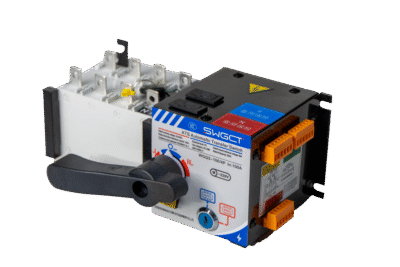
Transfer Mechanism
The switching mechanism transfers electrical loads between power sources.
Controller Unit
The controller monitors system conditions and executes transfer commands.
Circuit Protection Devices
Circuit breakers protect equipment from overloads and short circuits.
For reliable circuit protection solutions, visit:
https://swgct.net/product-category
Monitoring System
Modern ATS units include digital displays and communication interfaces for remote monitoring.
Types of ATS Panel Switches
Open Transition ATS
This design briefly disconnects both power sources during transfer. It is often called a “break-before-make” system.
Closed Transition ATS
This design allows a momentary overlap between sources, reducing power interruption.
Delayed Transition ATS
A short delay occurs between disconnecting one source and connecting another.
Soft Load Transfer ATS
Used in mission-critical applications where minimal power disturbance is required.
Benefits of Using an ATS Panel Switch
Uninterrupted Power Supply
Automatic transfer significantly reduces downtime during outages.
Improved Equipment Protection
Sensitive equipment receives stable power from backup sources.
Enhanced Safety
Automatic operation eliminates many risks associated with manual switching.
Reduced Operational Losses
Businesses can avoid costly production interruptions.
Increased Reliability
Power systems remain operational even during utility failures.
Common Applications
ATS panel switches are widely used in:
- Hospitals
- Data centers
- Manufacturing facilities
- Airports
- Commercial buildings
- Telecommunications infrastructure
- Financial institutions
- Government facilities
ATS Panel Switch Selection Factors
Choosing the right transfer switch panel requires careful evaluation.
Load Capacity
Calculate the total electrical load that requires backup power.
Voltage Requirements
Verify compatibility with system voltage ratings.
Transfer Speed
Critical facilities often require rapid switching.
Generator Compatibility
Ensure the ATS can communicate properly with the backup generator.
Future Expansion
Select equipment that can accommodate future growth.
ATS Panel Switch Installation Considerations
Proper installation is essential for reliable operation.
Location
Install equipment in a clean, dry, and ventilated environment.
Compliance
Follow local electrical codes and standards.
Testing
Perform routine operational testing to verify functionality.
Maintenance
Schedule inspections for controllers, contacts, and protective devices.
ATS Panel Switch and Circuit Breaker Integration
Circuit breakers play a major role in ATS systems by providing fault protection and isolation.
Businesses seeking dependable electrical protection components can explore:
https://swgct.net/product-category
Selecting high-quality protection equipment improves overall system reliability and safety.
Future Trends in ATS Technology
The industry continues to evolve with advanced technologies.
Smart Monitoring
Cloud-based monitoring enables real-time system visibility.
IoT Integration
Connected devices provide predictive maintenance capabilities.
Energy Management
Modern ATS systems support energy optimization strategies.
Remote Diagnostics
Technicians can troubleshoot systems remotely, reducing maintenance costs.
Frequently Asked Questions
What does ATS stand for?
ATS stands for Automatic Transfer Switch.
Why is an ATS panel switch important?
It automatically transfers power to a backup source during outages, ensuring continuous operation.
Can an ATS work with any generator?
Most ATS systems are compatible with generators that support automatic start functionality.
How often should an ATS be tested?
Industry best practices recommend monthly inspections and periodic load testing.
Is ATS required for commercial buildings?
Many critical facilities require ATS systems to comply with operational and safety requirements.
How long does an ATS transfer take?
Transfer times vary depending on the ATS type, but many systems switch within seconds.

Conclusion
An ATS panel switch is a vital component for organizations that require uninterrupted power. By automatically switching between utility power and backup generation sources, these systems improve reliability, enhance safety, and protect critical operations from unexpected outages.
Whether used in hospitals, factories, data centers, or commercial facilities, investing in a high-quality automatic transfer switch panel can significantly strengthen power continuity and operational resilience.
Recommended Resources (Outbound Links)
- https://www.eaton.com/us/en-us/products/low-voltage-power-distribution-controls-systems/automatic-transfer-switches.html
- https://www.schneider-electric.com/en/work/products/product-launch/automatic-transfer-switches/
- https://www.cummins.com/generators/automatic-transfer-switches


