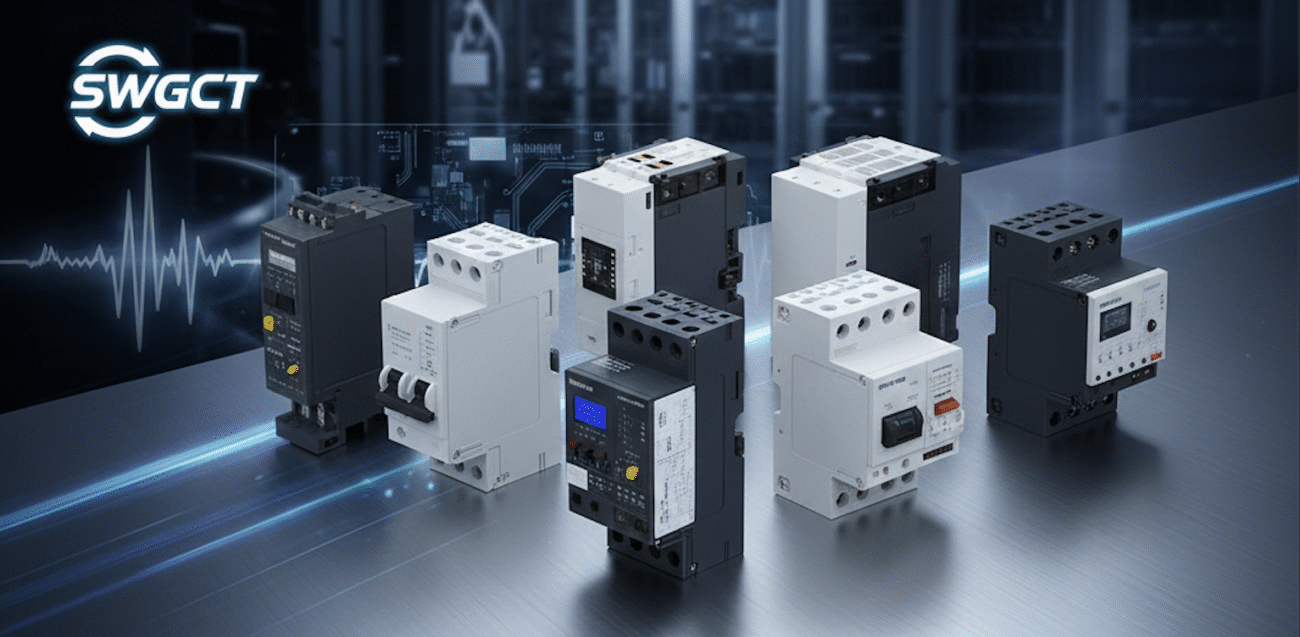



Isolation Switch: Selection Guide

An isolation switch is an important component in electrical systems where equipment and circuits need to be safely disconnected from a power source. By providing a clear means of electrical isolation, it allows maintenance personnel and electrical professionals to work on equipment with reduced risk from an energized supply.
Isolation switches are widely used in industrial facilities, commercial buildings, distribution systems, machinery, renewable energy installations, and other electrical applications.
For electrical distributors, contractors, system integrators, and equipment buyers, understanding the function, types, and selection requirements of an isolation switch is important when designing or purchasing electrical equipment.

What Is an Isolation Switch?
An isolation switch is a mechanical switching device used to disconnect an electrical circuit or piece of equipment from its power supply.
Unlike a protective device whose primary purpose is to interrupt fault current, an isolation switch is primarily intended to provide electrical isolation.
Once the switch is placed in the appropriate OFF position, the isolated circuit can be separated from the electrical supply according to the design and applicable requirements.
An isolation switch may also be referred to as an:
- Isolator switch
- Electrical isolator
- Disconnect switch
- Isolation switchgear
The exact terminology can vary between regions and applications.
How Does an Isolation Switch Work?
The operating principle of an isolation switch is relatively straightforward.
1. Normal Operation
During normal operation, the isolation switch remains in the ON position and allows electrical current to flow through the connected circuit.
The equipment can therefore operate normally while the switch maintains the electrical connection.
2. Switching to the OFF Position
When equipment needs to be isolated, the operator moves the isolation switch to the OFF position.
The switching mechanism separates the electrical contacts and disconnects the relevant conductors from the power supply.
3. Electrical Isolation
After disconnection, the isolated circuit can be separated from the source according to the system design.
For maintenance work, additional safety procedures such as verification of isolation, locking, tagging, and testing should be followed according to applicable regulations and site procedures.
4. Reconnecting the Circuit
Once maintenance or other work has been completed and the system has been confirmed safe to energize, the isolation switch can be returned to its ON position.
The circuit is then reconnected to the power source.
Main Components of an Isolation Switch
Although construction varies between products, a typical isolation switch includes several key components.
Switching Contacts
The contacts establish or interrupt the electrical connection.
The contact design and material can affect the electrical performance, durability, and service life of the switch.
Operating Mechanism
The operating mechanism allows the user to move the switch between ON and OFF positions.
Depending on the product, operation may be through a rotary handle, lever, or another mechanical mechanism.
Enclosure
The enclosure protects the internal components and can provide protection against dust, moisture, accidental contact, and other environmental conditions.
For outdoor or industrial applications, the enclosure specification becomes particularly important.
Terminals
Terminals provide the connection between the isolation switch and the electrical conductors.
The terminal configuration should be compatible with the required conductor size and rated current.
Handle and Position Indicator
Many isolation switches provide a visible indication of the switch position.
Clear ON and OFF markings can help operators identify whether the circuit is connected or isolated.
Types of Isolation Switches
Isolation switches are available in different configurations to suit different electrical systems.
Single-Pole Isolation Switch
A single-pole isolation switch controls one conductor.
It can be used in certain single-phase applications where the electrical system permits this configuration.
Double-Pole Isolation Switch
A double-pole isolation switch can disconnect two conductors simultaneously.
It is commonly considered for single-phase applications where both conductors need to be disconnected.
Three-Pole Isolation Switch
A three-pole isolation switch is designed for three-phase electrical systems.
It can disconnect the three phase conductors simultaneously and is widely used in industrial and commercial electrical installations.
Four-Pole Isolation Switch
A four-pole isolation switch can disconnect three phase conductors together with the neutral conductor.
This configuration can be useful where the neutral must also be isolated according to the system design and applicable electrical requirements.
Rotary Isolation Switch
A rotary isolation switch uses a rotating handle to operate the internal switching mechanism.
Rotary designs are widely used in industrial equipment, machinery, control panels, and distribution applications.
Enclosed Isolation Switch
An enclosed isolation switch combines the switching mechanism with a protective enclosure.
This design can be useful for applications where additional protection against environmental conditions or accidental contact is required.
Isolation Switch vs. Circuit Breaker
An isolation switch and a circuit breaker may appear similar because both can disconnect an electrical circuit, but their primary functions are different.
| Feature | Isolation Switch | Circuit Breaker |
|---|---|---|
| Main purpose | Electrical isolation | Circuit protection |
| Manual operation | Common | Common |
| Automatic fault interruption | Generally not its primary function | Yes |
| Overcurrent protection | Normally not provided | Provided |
| Maintenance isolation | Common application | Can provide disconnection depending on design |
| Typical role | Safe circuit isolation | Protection and switching |
An isolation switch should not automatically be treated as a replacement for a circuit breaker.
In many electrical systems, the two devices perform complementary functions. A circuit breaker provides protection against electrical faults and overcurrent conditions, while an isolation switch provides a means of disconnecting equipment or circuits.
The correct arrangement depends on the electrical system and applicable standards.

Where Are Isolation Switches Used?
Isolation switches are used in a wide range of electrical and industrial applications.
Industrial Equipment
Factories and industrial facilities use isolation switches to disconnect motors, machinery, control equipment, and other electrical loads during maintenance.
A local isolation switch can make it easier for maintenance personnel to disconnect equipment from its electrical supply.
Electrical Distribution Systems
Isolation switches can be incorporated into electrical distribution systems to provide controlled disconnection of circuits or equipment.
The appropriate configuration depends on the voltage, current, number of phases, and system architecture.
HVAC Systems
Heating, ventilation, and air-conditioning equipment may require local electrical isolation for servicing and maintenance.
An appropriately rated isolation switch can provide a dedicated means of disconnecting the equipment.
Motor Control
Motors may require a local disconnecting device so that electrical power can be isolated before maintenance.
Isolation switches can therefore be used alongside motor protection and control equipment.
Solar and Renewable Energy Systems
Isolation and disconnecting devices are also used in renewable energy installations.
Depending on the system architecture, isolation may be required between different parts of the electrical system, such as generation equipment, inverters, and distribution equipment.
Commercial Buildings
Commercial facilities can use isolation switches for lighting systems, HVAC equipment, pumps, machinery, and other electrical loads.
Key Factors When Choosing an Isolation Switch
Choosing the correct isolation switch requires consideration of the complete electrical application.
1. Rated Voltage
The isolation switch must be suitable for the system voltage.
The rated voltage should meet or exceed the requirements of the intended electrical system according to the applicable product standard.
2. Rated Current
The current rating must be suitable for the connected load and operating conditions.
Common ratings may range from relatively small control applications to high-current industrial distribution systems.
The actual rating should be selected according to the electrical load and installation requirements rather than simply choosing the largest available model.
3. Number of Poles
Determine how many conductors need to be disconnected.
Depending on the system, the appropriate configuration may be:
- 1 pole
- 2 poles
- 3 poles
- 4 poles
Three-phase applications commonly require three-pole or four-pole configurations depending on whether the neutral conductor must also be switched.
4. Application Category
The intended application should be considered before selecting an isolation switch.
Different requirements may apply to:
- Resistive loads
- Motors
- Industrial machinery
- HVAC equipment
- Distribution systems
- Renewable energy systems
Motor and other inductive loads can have different switching characteristics from simple resistive loads.
5. Installation Environment
The installation environment can significantly affect product selection.
Consider whether the switch will be installed:
- Indoors
- Outdoors
- In a control cabinet
- In an industrial facility
- In a dusty environment
- In a humid environment
The enclosure and protection level should be appropriate for the installation location.
6. Lockable Handle
For maintenance applications, a lockable handle can provide an important operational feature.
A lockable isolation switch can help prevent unauthorized or accidental operation while equipment is being serviced.
7. Certification and Standards
The required standards and certifications depend on the product type, application, and destination market.
Electrical contractors and distributors should verify the relevant requirements before selecting an isolation switch for a specific project.
Safety Considerations for Isolation Switches
An isolation switch is an important safety component, but operating one correctly requires appropriate procedures.
Before maintenance work begins, personnel should confirm that the correct circuit has been isolated and follow the applicable site safety procedures.
Depending on the application, these procedures may include:
- Identifying the correct power source
- Switching the isolator to the OFF position
- Preventing unauthorized operation
- Applying lockout/tagout procedures where required
- Verifying that the circuit is de-energized
- Following applicable electrical safety regulations
Isolation should never be assumed simply because a switch has been moved to the OFF position. Appropriate verification procedures are essential for electrical maintenance work.
How to Choose the Right Isolation Switch
A simple selection process can help buyers identify a suitable product.
Step 1: Identify the Electrical System
Determine the system voltage, frequency, phase configuration, and grounding arrangement.
Step 2: Determine the Load
Identify the connected load and its rated operating current.
For motors and other inductive loads, consider the relevant switching and operating characteristics.
Step 3: Select the Number of Poles
Determine whether one, two, three, or four conductors need to be isolated.
Step 4: Consider the Installation Environment
Check whether the switch will be installed indoors, outdoors, inside a cabinet, or in a demanding industrial environment.
Step 5: Check Operating Requirements
Determine whether the application requires a rotary handle, visible position indication, lockable operation, or other specific features.
Step 6: Verify Standards
Confirm the required product standards and certifications for the target market and installation.
Step 7: Select a Reliable Supplier
For B2B projects, supplier capabilities are also important.
Buyers should evaluate:
- Product range
- Quality control
- Technical support
- Customization capability
- Production capacity
- Certifications
- Delivery capability
Why Choose SWGCT Isolation Switches?
SWGCT provides electrical switching and protection products for industrial and commercial power applications.
The company’s product portfolio includes isolation and switching solutions designed for different electrical system requirements. Buyers can evaluate available configurations according to rated current, voltage, pole configuration, installation environment, and application.
For customers with specific technical requirements, OEM and customized electrical product solutions can also be considered based on the project requirements.
You can explore the SWGCT electrical product range to learn more about its switching and protection solutions.
Conclusion
An isolation switch provides a reliable means of disconnecting electrical equipment and circuits from their power supply. Its primary role is to provide electrical isolation, making it an important component for maintenance, servicing, and controlled electrical disconnection.
The correct isolation switch depends on several factors, including rated voltage, rated current, number of poles, load characteristics, installation environment, operating mechanism, lockout requirements, and applicable standards.
For electrical contractors, distributors, system integrators, and industrial equipment buyers, selecting the right isolation switch should always begin with a clear understanding of the electrical system and application.
A properly specified isolation switch, combined with appropriate electrical protection and safe working procedures, can contribute to a more reliable and maintainable electrical system.
Frequently Asked Questions
What is an isolation switch?
An isolation switch is a mechanical switching device used to disconnect an electrical circuit or equipment from its power supply for isolation purposes.
What is the difference between an isolation switch and a circuit breaker?
An isolation switch is primarily designed to provide electrical isolation, while a circuit breaker is primarily designed to protect electrical circuits against overcurrent and fault conditions.
Can an isolation switch be used for a motor?
Yes, an appropriately rated isolation switch can be used to disconnect a motor from its electrical supply. The switch must be suitable for the motor’s voltage, current, load characteristics, and application requirements.
What is a 4-pole isolation switch?
A 4-pole isolation switch can disconnect three phase conductors and the neutral conductor. It may be used in three-phase, four-wire electrical systems where neutral isolation is required.
Does an isolation switch provide overload protection?
An isolation switch is generally not intended to provide overload protection. Separate protective equipment, such as a circuit breaker or fuse, may be required depending on the electrical system.
Are isolation switches used outdoors?
Yes. Isolation switches can be designed for outdoor applications, but the selected product must have an enclosure and environmental protection rating suitable for the installation conditions.
Why is a lockable isolation switch useful?
A lockable isolation switch can help prevent unauthorized or accidental operation while electrical equipment is being inspected, serviced, or maintained.
How do I select an isolation switch?
Consider the system voltage, rated current, number of poles, load type, installation environment, switching requirements, lockout requirements, certifications, and applicable electrical standards before selecting a product.