



APFC Capacitor: Complete Guide to Selection, Working Principle and Benefits


Introduction
APFC capacitor technology has become an essential part of modern electrical distribution systems. As industries continue to increase their electricity consumption, maintaining a high power factor is more important than ever. An efficient Automatic Power Factor Correction (APFC) system helps reduce reactive power, minimize energy losses, and improve overall electrical performance.
Whether you operate a manufacturing facility, commercial building, or large industrial plant, selecting the correct APFC capacitor can significantly reduce electricity costs while extending the service life of electrical equipment. This guide explains how these systems work, their advantages, selection criteria, maintenance requirements, and practical applications.
What Is an APFC Capacitor?
An APFC capacitor is a component used in an Automatic Power Factor Correction system. It supplies reactive power to electrical networks, reducing the amount of reactive current drawn from the utility.
Unlike fixed capacitor banks, an automatic system continuously monitors electrical loads and switches capacitor stages on or off according to demand.
This allows the electrical installation to maintain a stable power factor under changing load conditions.
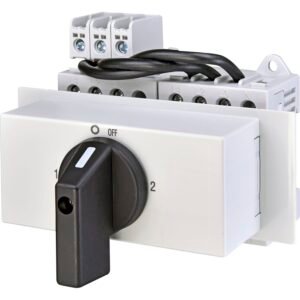
Power Factor Correction Capacitor Systems Explained
Many industrial loads—including induction motors, welding machines, compressors, and transformers—consume reactive power.
This results in:
- lower power factor
- increased current
- higher transmission losses
- utility penalties
- additional stress on transformers and cables
A properly designed power factor correction system compensates for this reactive power automatically.
For an overview of power factor correction principles, the International Electrotechnical Commission (IEC) provides useful technical resources:
How an Automatic Power Factor Correction Capacitor Works
An APFC controller continuously measures the system power factor through current transformers.
When the power factor drops below the preset value, the controller energizes one or more capacitor stages.
When electrical demand decreases, unnecessary capacitor stages are disconnected.
This automatic adjustment keeps the power factor close to unity without manual intervention.
Typical components include:
- APFC controller
- capacitor bank
- contactors
- detuned reactors (if required)
- protection devices
- circuit breakers
Components of an APFC Capacitor System
APFC Capacitor Controller
The controller analyzes voltage and current in real time and decides when additional capacitance is required.
APFC Capacitor Bank
The capacitor bank provides the reactive power necessary to compensate inductive loads.
Switching Devices
Modern systems use either capacitor contactors or thyristor switching depending on application requirements.
APFC Capacitor Protection Equipment
Reliable protection is essential.
Industrial circuit breakers protect capacitor banks from overloads and short circuits.
For industrial-quality electrical protection products, visit:
Benefits of APFC Capacitors
Installing an automatic capacitor bank provides several important advantages.
Lower Electricity Bills
Many utilities apply penalties for poor power factor.
Improving power factor can reduce these additional charges.
Better Energy Efficiency
Lower reactive current reduces cable losses and transformer loading.
Increased Equipment Life
Reduced heating helps extend the life of:
- motors
- transformers
- generators
- switchgear
Improved Voltage Stability
Power factor correction helps maintain stable voltage during varying load conditions.
Greater System Capacity
Lower current allows existing electrical infrastructure to support additional loads.
Applications of APFC Capacitor Systems
These systems are widely used in:
- manufacturing plants
- steel mills
- food processing facilities
- shopping malls
- hospitals
- office buildings
- water treatment plants
- data centers
- renewable energy installations
How to Select the Right APFC Capacitor
Selecting the correct equipment depends on several factors.
Load Characteristics
Identify whether the electrical load changes frequently or remains constant.
Required kVAR Rating
A power quality study helps determine the required compensation capacity.
Harmonic Levels
Facilities with variable frequency drives should consider detuned capacitor banks.
IEEE provides guidance on harmonic considerations:
Installation Environment
Consider:
- ambient temperature
- ventilation
- humidity
- dust levels
Installing an APFC Capacitor System
Proper installation improves safety and long-term reliability.
Recommendations include:
- install in well-ventilated panels
- use correctly sized cables
- ensure proper grounding
- verify protection coordination
- inspect torque on electrical terminals
Maintaining APFC Capacitors
Routine inspection should include:
- capacitor swelling
- leakage
- terminal temperature
- controller operation
- contactor condition
- ventilation cleaning
Preventive maintenance reduces unexpected downtime.
Common APFC Capacitor Problems
| Problem | Possible Cause | Solution |
|---|---|---|
| Low power factor | Failed capacitor | Replace capacitor |
| Overheating | Poor ventilation | Improve airflow |
| Frequent switching | Incorrect controller settings | Reconfigure controller |
| Harmonics | Nonlinear loads | Install detuned reactors |
APFC Capacitor vs Fixed Capacitor Bank
| Feature | APFC System | Fixed Capacitor |
|---|---|---|
| Automatic control | Yes | No |
| Suitable for varying loads | Yes | Limited |
| Energy efficiency | High | Moderate |
| Manual adjustment | Not required | Required |
| Investment | Higher | Lower |
Future of APFC Capacitor Technology
New technologies include:
- IoT monitoring
- cloud diagnostics
- predictive maintenance
- smart energy management
- digital power quality analysis
These innovations make automatic power factor correction systems more efficient and easier to maintain.
Frequently Asked Questions
What does an APFC capacitor do?
It supplies reactive power automatically to improve power factor and reduce electrical losses.
How long does an APFC capacitor last?
Most high-quality capacitors have a service life of 5–10 years, depending on operating conditions.
Can APFC systems reduce electricity costs?
Yes. They help avoid utility penalties and improve energy efficiency.
How often should capacitor banks be inspected?
Industrial systems should be inspected at least every six months.
Are harmonic filters always necessary?
No. They are recommended when significant harmonic distortion exists.
Can an APFC system be retrofitted?
Yes. Most industrial facilities can install automatic power factor correction panels without major modifications.
Conclusion
An APFC capacitor is a valuable investment for facilities seeking improved energy efficiency, lower operating costs, and greater electrical reliability. By automatically compensating for reactive power, these systems optimize electrical performance while protecting critical infrastructure.
When selecting an APFC solution, consider load characteristics, harmonic conditions, environmental factors, and proper protection devices. High-quality circuit breakers and electrical components are equally important for safe operation. Explore professional electrical products at https://swgct.net/product to support your power distribution and protection requirements.